
Live radio stays one of the quickest and most reliable conversation mediums worldwide. Whether listeners are tuning in for songs, breaking records, sports assertions, interviews, site visitor updates, or entertainment programs, they expect pronouncements to attain them almost right now. Modern radio stations invest intently in generation and infrastructure to make certain easy and uninterrupted actual-time broadcasting is possible.
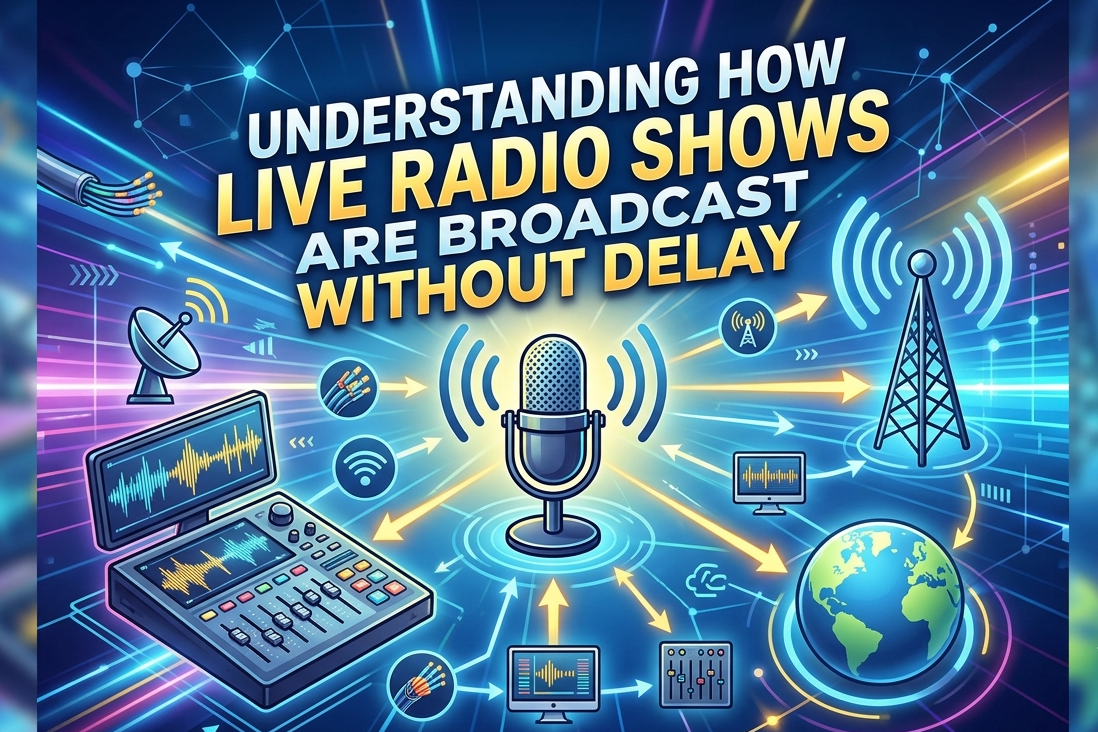
Understanding How Live Radio Shows Are Broadcast Without Delay: Well-known are the brand-new systems running backstage to supply content material/cloth to audiences in inner seconds. Unlike pre-recorded programs that go through enhancement before transmission, live broadcasts rise up in actual time. Radio presenters talk into microphones while audio is processed, transmitted, and bought with the useful resource of listeners nearly properly now.
As the broadcasting generation maintains evolving, radio stations increasingly more integrate conventional FM transmission systems with digital broadcasting systems and online streaming offerings. Learning how live radio shows are broadcast without delay permits giving an explanation for why radio remains one of the most accessible and trusted varieties of mass communication irrespective of the rise of digital media.
What Is Live Radio Broadcasting?
Live radio broadcasting refers back to the real-time transmission of audio content from a radio station directly to listeners without enormous delays. Unlike recorded programs that can be edited earlier than airing, live broadcasts stand concurrently as presenters communicate, traffic participates, and sports spread. This immediacy creates a very unique connection among broadcasters and audiences.
Live radio is substantially used for records insurance, sports activities statements, interviews, public occasions, emergency announcements, and interactive entertainment programs. Because information reaches audiences nearly right now, broadcasters need to cautiously manipulate both technical operations and content delivery.
Understanding the fundamentals of stake broadcasting is essential at the same time as exploring how live radio shows are broadcast without delay. Modern live radio combines traditional broadcasting strategies with superior digital structures that enhance reliability and transmission speed. These technologies assist stations in keeping consistent regular performance at the identical time as serving heaps and masses of listeners for the duration of unique regions.
How Does a Live Radio Show Reach Listeners in Real Time?
A stake radio show reaches listeners through a rather green transmission device that connects the studio, broadcasting machine, transmission systems, and radio receivers. As quickly as a radio jockey speaks into the microphone, the audio signal is captured, processed, and dispatched via specialized broadcasting infrastructure.
The sign is then transformed into radio waves and transmitted all through the station’s insurance region, permitting listeners to pay attention to the publication almost properly right away. This speedy gadget is one of the key motives why radio remains one of the quickest kinds of mass verbal exchange.
Key Stages in Real-Time Radio Broadcasting
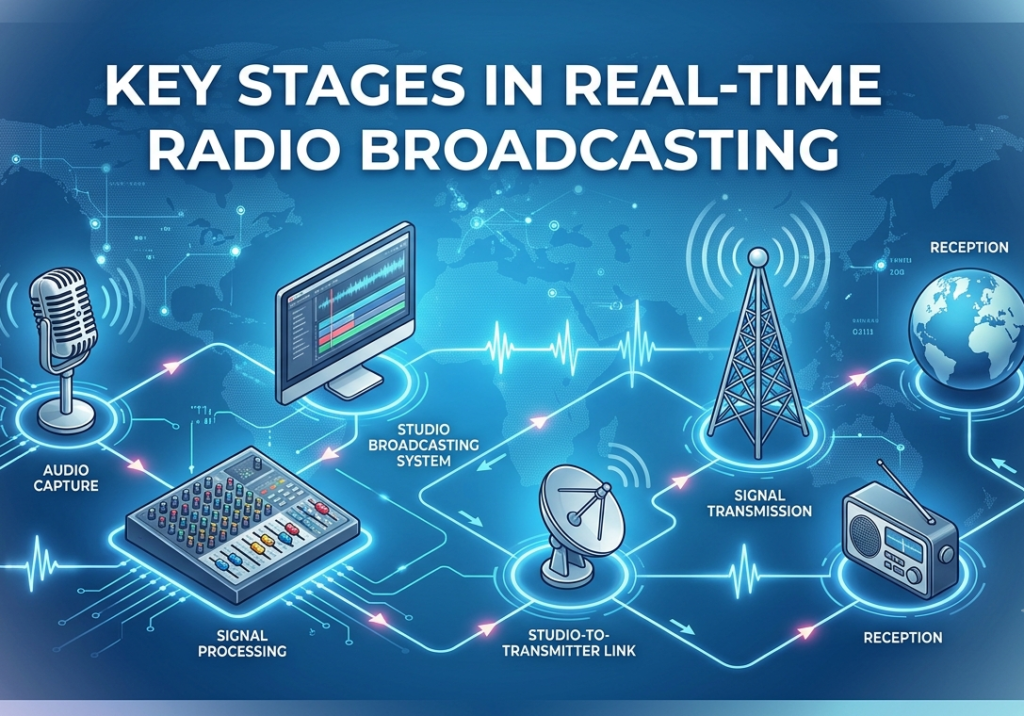
- Audio Capture: The radio jockey’s voice is captured via expert broadcast microphones. High-first-rate microphones make certain clear and correct audio recordings.
- Signal Processing: Audio processors decorate sound satisfactorily through balancing amount ranges and lowering unwanted noise. This prepares the audio for transmission.
- Studio Broadcasting System: The processed audio enters the station’s broadcasting community. These systems manipulate and path audio efficiently.
- Studio-to-Transmitter Link (STL): Dedicated verbal exchange links ship audio from the studio to the transmission facility. This switch takes place with minimum latency.
- Radio Frequency Conversion: Transmitters convert audio signals into FM radio frequency alerts. These symptoms are appropriate for over-the-air broadcasting.
- Signal Transmission: Transmission towers broadcast radio waves for the duration of the best insurance region. Tower top and transmitter energy have an impact on signal attainability.
- Reception with the resource of radios: Radio receivers seize transmitted signals and convert them back into audible sound. Listeners can pay interest in the program nearly right away.
- Continuous Real-Time Delivery: The whole transmission chain operates constantly in the course of live broadcasts. This guarantees clean and uninterrupted audio transport to audiences.
Major Components That Enable Delay-Free Radio Broadcasting
Several generation and broadcasting structures are painted collectively to make sure Stay Radio reaches listeners in actual time. Each channel performs a crucial role in retaining fast, dependable, and uninterrupted audio transmission.
Essential Elements of Live Broadcasting
- Professional Broadcast Microphones: High-extraordinary microphones capture voice alerts truly even while minimizing undesirable record noise. This guarantees correct audio seize from the start of the broadcasting tool.
- Audio Mixing Consoles: Broadcast mixers integrate voices, tunes, advertisements, and sound outcomes right into a balanced audio output. Engineers show the ones whose systems continuously eventually stay publicized.
- Audio Processing Equipment: Processors optimize sound notably, regulate extent tiers, and maintain consistency throughout unique program segments.
- Studio-to-Transmitter Links (STL): Dedicated communique systems switch audio from the radio studio to transmission centers with minimum latency.
- FM Transmission Systems: Powerful transmitters convert processed audio into radio frequency alerts that might travel in the direction of massive insurance regions.
- Radio Receivers: Listener gadgets accumulate and decode transmitted signs and symptoms, changing them once more into audible sound nearly at once.
What Happens Inside the Radio Studio During a Live Show?
The radio studio serves as the operational center of each live broadcast due to this fact. During stay programs, radio jockeys, producers, engineers, and technical personnel paint together to make certain easy content material, clothes, and shipping. Every 2 seconds of airtime calls for careful coordination to hold expert, extraordinary, and audience engagement.
Presenters manage discussions, introduce songs, conduct interviews, and engage with listeners. Producers oversee scheduling, monitor program timing, and coordinate advertisements. Engineers constantly reveal audio excellence and broadcasting structures to prevent technical disruptions.
Understanding what takes place within the studio is vital, even to getting to know how live radio shows are broadcast without delay, because the reality is effective studio operations form the foundation of real-time broadcasting achievement.
Why Is Audio Processing Important Before Transmission?
Raw audio captured from microphones often calls for enhancement in advance rather than being transmitted to audiences. Audio processing guarantees a defined sound that is clear, balanced, and professional no matter the content fabric kind or listening surroundings.
Key Audio Processing Functions
- Volume Normalization: Maintains steady loudness levels all through the post.
- Noise Reduction: Removes unwanted record sounds and interference.
- Equalization (EQ): Adjusts frequencies to improve voice readability and listening comfort.
- Compression Control: Reduces quantity fluctuations amongst unique audio resources.
- Signal Enhancement: Improves everyday sound richness and broadcasts amazingly.
- Transmission Optimization: Prepares audio indicators for efficient radio frequency broadcasting.
Without proper processing, listeners ought to revel in inconsistent audio stages and decreased sound satisfaction. These enhancements play a top function in assisting actual-time broadcasting performance.
How Do Radio Transmission Towers Work?
Transmission towers are one of the most essential components of the broadcasting machine. Once processed audio reaches the transmitter, it’s miles converted into electromagnetic radio waves that journey through the air. Towers offer the elevation needed to maximize sign coverage and minimize bodily obstacles.
The top and region of transmission towers proper now have an effect on broadcast range and signal reliability. Higher towers typically provide wider coverage and stronger reception at some stage in big geographical areas. Broadcasters strategically feature towers to optimize target market reach.
This infrastructure is a vital part of how live radio shows are broadcast without delay due to the reality that powerful transmission systems ensure content material fabric reaches listeners swiftly and constantly.
How Do Radio Stations Avoid Delays During Live Broadcasts?
Maintaining actual-time broadcasting calls for an aggregate of advanced eras, green infrastructure, and everyday technical supervision. Radio stations use specialized systems and backup measures to minimize latency, save you interruptions, and make sure listeners accumulate live content material smoothly and without incredible delays.
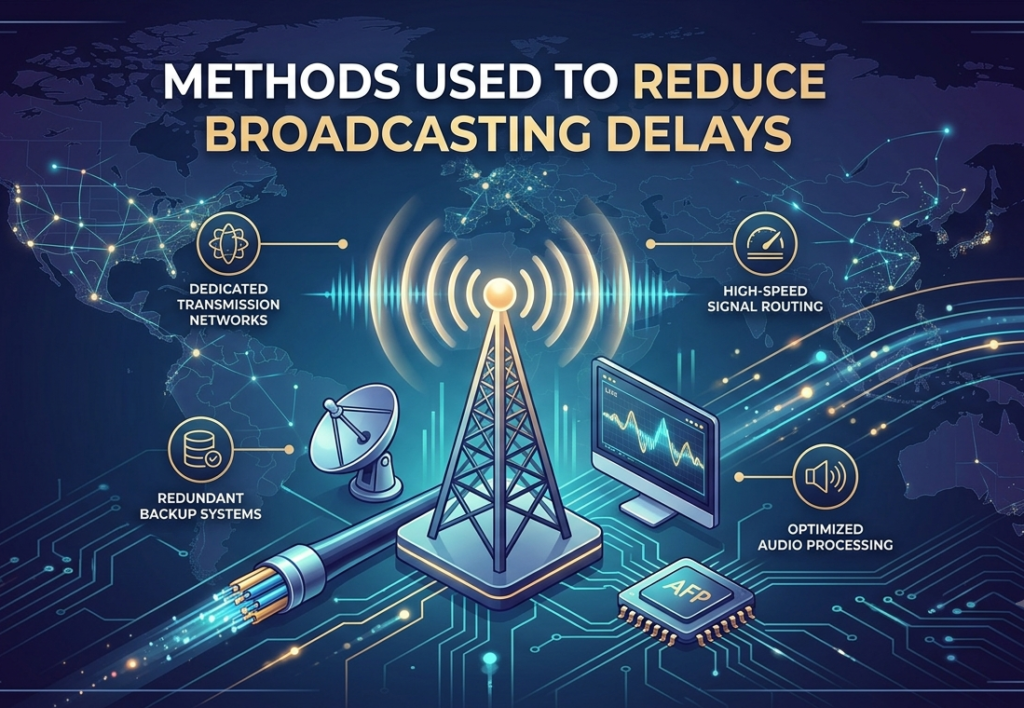
Methods Used to Reduce Broadcasting Delays
- Dedicated Transmission Networks: Specialized communication links provide quicker and extra reliable signal switches than modern internet connections.
- Redundant Backup Systems: Backup gadgets ensure broadcasting keeps regardless of the reality that number one systems experience screw-ups.
- Continuous Equipment Monitoring: Engineers display general common performance metrics in real time to discover capability problems early.
- High-Speed Signal Routing: Modern broadcasting infrastructure reduces delays among audio capture and transmission.
- Optimized Audio Processing: Efficient processing structures minimize latency at the same time as preserving sound first-rate.
- Professional Technical Support: Experienced engineering groups short deal with operational problems within the course of broadcasts.
Can Internet Streaming Create Delays Compared to FM Radio?
Many listeners are surprised whether or not online radio streams are as fast as traditional FM broadcasts. Most times, FM radio reaches listeners barely quicker due to the fact that signals excursion directly via radio frequencies without requiring internet buffering or server processing.
Online streaming includes additional steps, which encompass encoding, net transmission, server distribution, and tool buffering. These techniques can introduce delays starting from some seconds to greater than a minute depending on network situations and platform configurations.
Understanding those variations facilitates providing a reason for why conventional FM broadcasting frequently stays the preferred preference for time-sensitive content fabrication along with live sports, emergency updates, and breaking news.
What Role Does Automation Play in Live Radio Broadcasting?
Modern radio stations more and more depend on the automation era to beautify overall performance and assist in maintaining broadcasting operations. Automation systems manage playlists, commercials, program schedules, and everyday operational obligations. Automation allows broadcasters to keep reliability while allowing presenters and producers to build a reputation on direction, audience engagement, and content material creation.
Key Automation Benefits
- Playlist Scheduling: Automatically organizes music in line with programming necessities.
- Advertisement Management: Inserts classified ads at specific scheduled times.
- Program Coordination: Supports correct timing and content material fabric sequencing.
- Backup Broadcasting: Maintains continuity if stay content material or cloth study disruptions occur.
- Content Storage Management: Organizes audio documents and broadcasting properties successfully.
- Operational Efficiency: Reduces guide workload for manufacturing teams.
What Challenges Can Affect Live Radio Broadcasting?
Although radio stations’ artwork is difficult to preserve uninterrupted, diverse traumatic situations can on occasion have an impact on stakes. Technical problems, environmental factors, and operational complexities all require ongoing management. Broadcasters minimize the ‘risks’ via protection programs, backup systems, and non-forestalling tracking.
Common Broadcasting Challenges
- Equipment Failures: Microphones, mixers, or transmitting systems may additionally malfunction.
- Power Interruptions: Electrical issues can rapidly have an impact on broadcasting operations.
- Signal Interference: External radio frequency interference can also affect transmission terrifically.
- Network Problems: Communication hyperlink disasters can disrupt signal transport.
- Weather Conditions: Severe climate may affect transmission infrastructure.
- Human Error: Operational errors can once in a while create broadcasting issues.
How Will Future Technology Improve Real-Time Radio Broadcasting?
The future of radio broadcasting is more and more stimulated with the aid of virtual innovation, artificial intelligence, and superior verbal exchange technologies. These inclinations will keep improving transmission tempo, reliability, and target marketplace engagement.
Emerging technologies, which include cloud-based broadcasting, AI-assisted automation, 5G connectivity, and hybrid radio structures, are developing new possibilities for broadcasters. These device assist stations deliver content more effectively even as a growing goal marketplace acquires the direction of multiple structures.
As broadcasting infrastructure evolves, expertise on how live radio shows are broadcast without delay will become even more essential because destiny structures will preserve blending traditional radio generation with superior digital solutions.
Conclusion
Understanding How Live Radio Shows Are Broadcast Without Delay is well-known for the great combination of generation, engineering, and operational understanding that powers modern-day radio broadcasting. From microphones and audio processors to transmission towers and receivers, every piece of equipment plays a vital role in delivering content to audiences in actual time.
Radio stations depend on today’s infrastructure, expert technical groups, and superior broadcasting systems to hold seamless primary basic overall performance. These technologies allow listeners to gain statistics, leisure, interviews, and live sports almost at once, making radio one of the fastest communication structures available.
As the broadcasting era continues to advance, radio will remain an effective medium able to hand over real-time facts and enjoyment to tens of millions of people. Learning How Live Radio Shows Are Broadcast Without Delay offers precious belief into the structures that preserve staying broadcasting green, reliable, and applicable in the current media panorama.
Explore Our Recent Blogs
- Why Some FM Stations Clearer Than Others in Your Area?
- How Internet Speed Affects Online Radio Streaming Quality?
- Why Some FM Stations Clearer Than Others in Your Area?
- How FM Radio Frequencies Are Assigned in India?
- What Happens Inside a Radio Broadcasting Studio?
Frequently Asked Questions
1. How do live radio shows reach listeners so quickly?
Live radio shows use professional broadcasting structures that transmit audio from studios to transmission towers almost right now. Radio frequency indicators then journey through the air and are obtained through radios within the coverage area. The entire way takes location within fractions of a 2D.
2. Is FM radio faster than online streaming?
In most cases, FM radio is faster than online streaming because it does not require net buffering or server processing. Streaming structures regularly introduce small delays due to facts, transmission, and playback control. FM broadcasting generally offers extra right now shipping.
3. What equipment is required for live radio broadcasting?
Live broadcasting calls for microphones, audio mixers, processors, studio-to-transmitter links, transmitters, and monitoring structures. These technologies work together to capture, approach, and distribute audio content material, clothed effectively.
4. Why is audio processing important in radio?
Audio processing improves sound super via balancing volume levels, reducing noise, and improving readability. It ensures listeners attain the professionally best audio, irrespective of content material or fabric kind. Proper processing, moreover, supports inexperienced signal transmission.
5. Can technical failures interrupt live broad casts?
Yes, device malfunctions, strength outages, and transmission problems can from time to time have an impact on programs. However, maximum professional radio stations use backup structures and non-stop monitoring to minimize disruptions and maintain company continuity.
6. Will future technology make live radio even faster?
The emerging generation, in conjunction with 5G networks, cloud broadcasting, AI automation, and advanced transmission systems, is anticipated to enhance broadcasting overall performance similarly. These improvements will assist stations in supplying content and clothes. extra reliably at the same time as growing goal marketplace reach through multiple systems.