
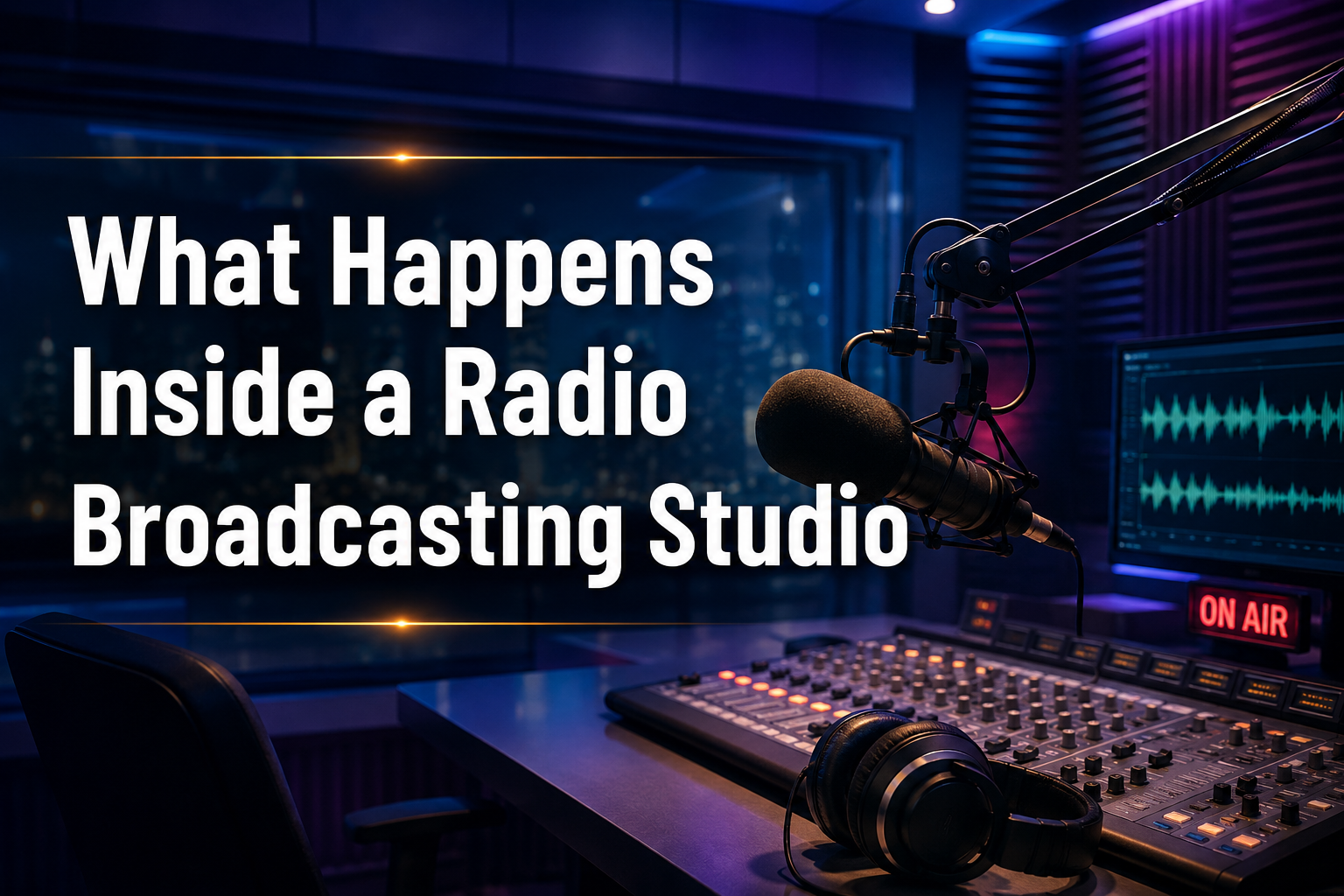
Radio remains one of the most trusted and extensively used kinds of conversation and entertainment worldwide. Every day, lots and hundreds of listeners tune in to FM stations for music, information, interviews, visitor updates, instructional programs, and live discussions. While listeners simply pay attention to the very last broadcast, a complicated production technique takes place behind the curtain. Understanding What Happens Inside a Radio Broadcasting Studio provides treasured notions into the human beings, devices, and generation chargeable for handing over seamless radio content creation.
A cutting-edge radio broadcasting studio is a whole lot more than a room with microphones and an audio system. It is a reasonably coordinated environment wherein radio jockeys, manufacturers, sound engineers, technicians, and broadcasting software work together to create expert programming. Every segment, song, commercial, and listener interplay passes via carefully controlled structures in advance to engage audiences.
As the broadcasting era keeps evolving, radio studios increasingly combine traditional FM infrastructure with virtual streaming, automation systems, and online target market engagement equipment. Learning What Happens Inside a Radio Broadcasting Studio helps deliver a reason for how radio stations maintain brilliant announcers at the same time as adapting to converting media consumption behavior.
Understanding the Purpose of a Radio Broadcasting Studio
A radio broadcasting studio serves as the crucial hub in which audio content material is created, controlled, processed, and transmitted to listeners. It offers the surroundings and technical infrastructure wanted for presenters, manufacturers, and engineers to deliver professional announcements.
Every element of radio production starts evolving in the studio earlier than reaching audiences via FM indicators or online streaming structures. The primary purpose of the studio is to make certain clear communication, reliable transmission, and normal audio nice. Whether the program consists of music, interviews, communicative indicators, or information bulletins, the studio provides the gear vital to organize and distribute content material successfully.
Understanding this function is critical while exploring What Happens Inside a Radio Broadcasting Studio due to the fact every broadcast depends on the studio’s operational systems.
Main Areas Found Inside a Radio Broadcasting Studio
Modern radio centers are usually divided into specialized sections that support wonderful production competencies. Each vicinity contributes to easy broadcasting operations and content material management.
Key Studio Sections
- On-Air Studio: The most important broadcasting room wherein radio jockeys host programs, broadcast interviews, and interact with listeners. This vicinity consists of microphones, headphones, and broadcasting consoles.
- Control Room: Sound engineers control audio tiers, classified ads, track playback, and technical operations from this segment. The manipulated room ensures professional audio exceptional during pronouncements.
- Production Studio: Used for recording advertisements, pre-recorded indics, voiceovers, podcasts, and promotional content material. This region supports enhancing content material, fabric, and adventure sports.
- Newsroom: Journalists and information agencies put together news bulletins, study recollections, and coordinate live critiques earlier than expected.
- Server Room: Houses broadcasting servers, automation systems, networking gadgets, and digital storage systems essential for station operations.
- Management Offices: Administrative agencies oversee programming schedules, advertising and marketing, advertising income, and station control capabilities.
Essential Equipment Used in Radio Studios
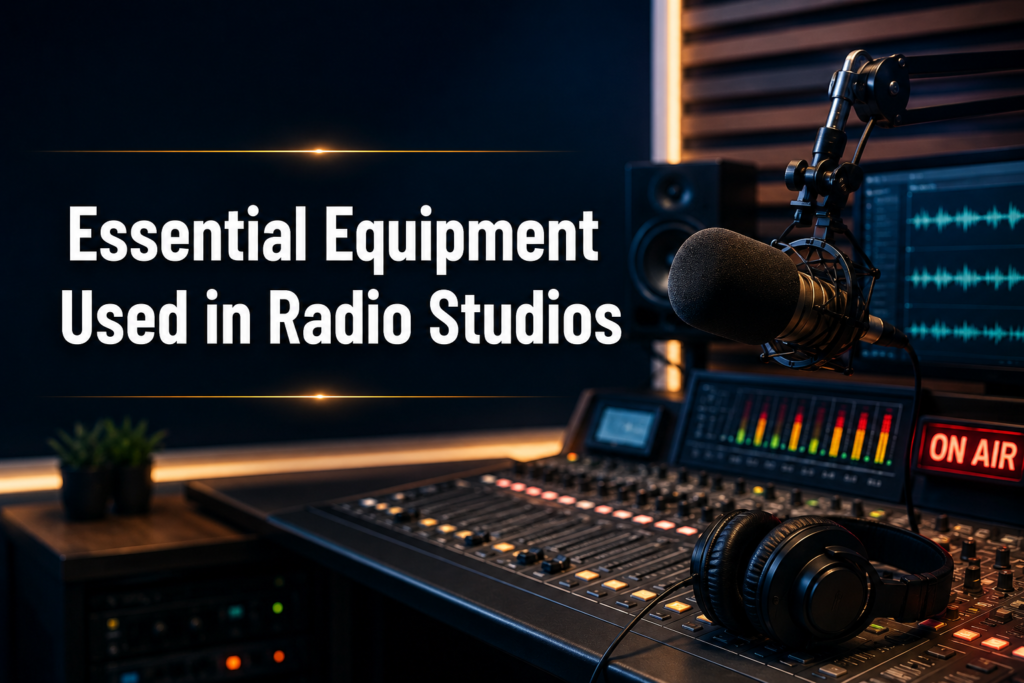
Technology bureaucracy is the inspiration of present-day radio broadcasting. Professional machines ensure clean audio capture, processing, tracking, and transmission at some stage in the manufacturing procedure. Understanding studio generation is a crucial part of reading What Happens Inside a Radio Broadcasting Studio.
Important Radio Broadcasting Equipment
- Broadcast Microphones: High-quality microphones capture clean voice recordings at the same time as decreasing unwanted background noise and interference.
- Audio Mixers: Mixing consoles combine a couple of audio resources, together with voices, tracks, classified ads, and sound consequences.
- Headphones: Presenters and engineers use headphones to reveal audio quality and communication in the course of broadcasts.
- Broadcast Computers: Dedicated structures manage playlist, automation software program application, scheduling, and digital content material storage.
- Telephone Integration Systems: These systems allow listeners to take part via live calls and target marketplace interplay segments.
- Audio Processors: Specialized gadgets beautify sound satisfactorily, preserve extent consistency, and improve typical listening evaluations.
The Role of Radio Jockeys Inside the Studio
Radio jockeys are some of the most visible personalities inside radio broadcasting. They serve as the voice of the station and assist in constructing connections with listeners through enticing conversations, song presentations, interviews, and amusement segments. Their potential to speak efficaciously often affects program fulfillment.
Before programs start, radio jockeys spend a sizable amount of time getting equipped with content, getting to know subjects, reviewing program schedules, and coordinating with manufacturers. During live shows, they control discussions, introduce songs, conduct behavior interviews, and respond to audience participation. Understanding their obligations is a good amount of information. What Happens Inside a Radio Broadcasting Studio.
Modern radio jockeys regularly make bigger their roles beyond traditional broadcasting to attract audiences through social media, online streaming systems, and virtual content material fabrication advent. This broader involvement allows stations to hold relevance in modern multimedia surroundings.
What Happens Before a Radio Show Goes Live?
Successful radio programs rely heavily on practice and making plans. Before any broadcast starts, background action teams coordinate content material, technical structures, and scheduling to ensure a smooth and expert listening experience.
Key Pre-Broadcast Activities
- Show Schedule Planning: Producers create wonderful program schedules that outline segments, timings, track breaks, and commercials. This helps preserve an organized broadcast drift.
- Music Playlist Preparation: Songs are decided on and organized consistent with the program format and audience selections. Carefully planned playlists enhance listener engagement.
- Advertisement Coordination: Commercials are reviewed and scheduled for unique time slots. Proper placement ensures easy transitions for the duration of the print.
- Topic Research and Content Planning: Radio jockeys and manufacturers study trending topics, information updates, and speaking elements. This education allows for the creation of informative and appealing content material.
- Technical Equipment Testing: Engineers take a look at microphones, mixers, headphones, and broadcasting structures before airtime. These exams help save you from technical problems all through stay programs.
- Audio Quality Verification: Sound ranges, recording structures, and transmission devices are cautiously monitored. Consistent audio excellence is important for professional broadcasting.
- Guest Coordination: For interview-based programs, groups speak with visitors and confirm participation information. This ensures interviews run smoothly in some unspecified time in the future of the display.
- Question and Segment Preparation: Production agencies put together interview questions, speak topics, and program segments in advance. This permits holding structure and audience members’ hobbies in common.
- Communication Setup: Internal communique structures are checked to make sure presenters, manufacturers, and engineers can coordinate effectively sooner or later in the broadcast.
- Final Program Review: Before going live, companies assess schedules, content material, and technical settings. This very last test allows us to make sure the entirety is prepared for a hit broadcast.
Live Broadcasting: What Happens During the Show?
Live radio broadcasting requires regular coordination among presenters, producers, and technical personnel. Once a program starts evolving, each 2D of airtime has to be carefully controlled to preserve expert greatness and target market engagement.
Radio jockeys introduce content material fabrication, engage with listeners, conduct interviews, and control program flow. Producers show timing, make timetable commercials, and coordinate upcoming segments. Engineers continuously alter audio stages and ensure technical stability sooner or later for the post.
Key Activities During Live Broadcasts
- Program Hosting: Radio presenters’ manual discussions and preserved goal-marketplace engagement.
- Music Scheduling: Songs are decided on and played consistent with programming necessities.
- Advertisement Management: Commercial breaks are inserted in line with predetermined schedules.
- Audience Interaction: Listeners participate via calls, messages, and social media engagement.
- Audio Monitoring: Engineers screen sound exceptionally and make changes when wanted.
- Time Management: Every section follows strict timing hints to keep timetable accuracy.
How Audio Is Processed Before Transmission?
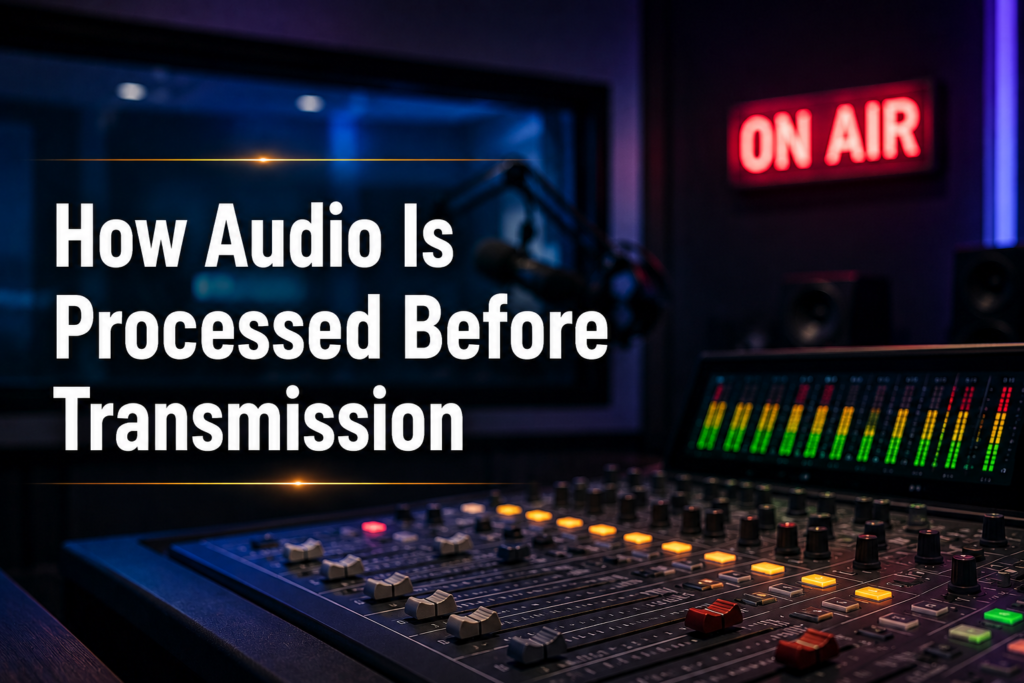
One of the most essential additives of What Happens Inside a Radio Broadcasting Studio consists of audio processing. Raw audio cannot simply be transmitted right now to listeners. Instead, it passes through more than one stage designed to optimize sound incredibly and broadcasting consistency.
Audio processors stabilize amount levels, lessen distortion, and enhance clarity. Equalization systems regulate frequencies to enhance listening comfort at the same time as compressors maintain regular sound ranges throughout one-of-a-kind content sorts. These methods make sure listeners enjoy expert-great audio irrespective of program layout.
After processing, audio signs are organized for transmission through broadcasting systems. Whether allotted through FM transmitters or online streaming systems, processed audio gives a greater, polished, and dependable listening experience.
How Radio Signals Reach Listeners?
Once audio leaves the studio, it enters the transmission degree. Broadcast signs journey from studio facilities to transmission towers through specialized conversation hyperlinks. These structures make certain content material reach audiences throughout specific coverage regions.
FM transmitters convert audio into radio frequency signals that journey through the air and are received by way of radios inside coverage zones. Online broadcasting systems concurrently distribute audio through internet streaming servers. Many stations now combine each strategy to maximize target market reach.
The transmission procedure highlights an important element of What Happens Inside a Radio Broadcasting Studio because a successful broadcast is predicated not only on content material introduction but additionally on dependable signal delivery systems.
Modern Technology Transforming Radio Studios
Today’s radio studios depend more and more on digital technologies that enhance overall performance, flexibility, and target audience engagement. Automation structures manage recurring duties while allowing broadcasters to concentrate on content advent and listener interaction.
Modern Broadcasting Technologies
- Radio Automation Software: Automates playlists, commercials, scheduling, and program management.
- Cloud-Based Storage: Provides stable storage for audio content material and broadcasting resources.
- Digital Audio Workstations: Support expert editing, production, and content material creation.
- Streaming Integration Systems: Allow simultaneous FM and online broadcasting.
- Remote Broadcasting Tools: Enable presenters to broadcast from outside locations.
- Audience Analytics Platforms: Provide listener insights and performance length information.
Challenges Faced Inside Radio Broadcasting Studios
Although radio broadcasting appears seamless to listeners, manufacturing groups regularly face technical, operational, and aggressive challenges. Managing the ones’ problems effectively is vital to make certain easy announcements, keep audio fine, and maintain audiences’ engagement.
Common Broadcasting Challenges
- Equipment Malfunctions: Microphones, mixers, laptop structures, and other broadcasting systems can occasionally fail. Technical companies need to solve troubles quick to avoid interruptions.
- Transmission Problems: Signal disruptions and connectivity troubles may additionally have an effect on broadcast quality. Reliable transmission structures are critical for non-stop carriers.
- Scheduling Conflicts: Managing program timings, classified ads, interviews, and stay segments calls for cautious coordination. Poor scheduling can disrupt the go-with-the-flow of broadcasts.
- Audience Retention: Radio stations constantly compete for listener interest. Keeping content clothes fresh and attractive is essential to hold target market loyalty.
- Live Broadcast Errors: Unexpected errors can come up for the duration of the stay, which consist of incorrect audio playback or communication troubles. Quick reaction and problem-fixing talents are essential.
- Content Creation Pressure: Producers and radio jockeys need to regularly boom with new topics, discussions, and leisure segments. Consistent creativity is critical for long-term fulfillment.
- Competition from Digital Media: Streaming systems, podcasts, and social media provide possible leisure alternatives. Radio stations should continuously innovate to remain relevant.
- Adapting to Changing Listener Preferences: Audience pastimes evolve over the years, requiring broadcasters to update programming techniques and content formats regularly.
Why Radio Broadcasting Studios Remain Important?
Despite the increase of digital leisure structures, radio broadcasting studios preserve playing a critical role in verbal exchange and public engagement. Radio stays accessible, lower-priced, and able to reach several audiences across city and rural areas.
Broadcasting studios offer infrastructure for news reporting, emergency conversation, schooling, enjoyment, and cultural programming. Their ability to supply real-time statistics stays mainly precious within the path of emergencies and public activities.
As media technology keeps evolving, radio studios are adapting in preference to disappearing. The integration of FM broadcasting, online streaming, podcasts, and social media ensures radio remains applicable in modern-day media landscapes.
Conclusion
Understanding What Happens Inside a Radio Broadcasting Studio highlights the complicated mixture of technology, creativity, making plans, and teamwork that powers contemporary radio broadcasting. From program education and live website hosting to audio processing and sign transmission, each level contributes to turning in expert-great content cloth for listeners.
Radio studios maintain evolution through automation, virtual production gear, and online streaming technologies. These improvements beautify efficiency at the same time as supporting broadcasters in attaining large and additional diverse audiences. Despite changes in media consumption conduct, radio stays a trusted and widely used verbal exchange platform.
Learning What Happens Inside a Radio Broadcasting Studio provides treasured perception into the systems, tools, and professionals liable for developing the broadcasts that hundreds of thousands of humans enjoy every day.
Explore Our Recent Blogs
- How FM Radio Advertising Works in India
- Why Some FM Stations Are Clearer Than Others in Your Area?
- How Internet Speed Affects Online Radio Streaming Quality?
- Why Some FM Stations Are Clearer Than Others in Your Area?
- How FM Radio Frequencies Are Assigned in India?
Frequently Asked Questions
1. What equipment is used inside a radio broadcasting studio?
Radio studios use microphones, audio mixers, headphones, automation software programs, recording structures, and broadcasting computer systems. These tools help create, manipulate, and transmit an important role. audio content professionally. Modern studios, moreover, embody streaming and networking devices.
2. What does a radio jockey do in the studio?
A radio jockey hosts programs, introduces songs, conducts interviews, interacts with listeners, and manages discussions. They assist in maintaining target audience engagement at some point of the decreses. Preparation and communication capabilities are vital parts of their character.
3. How do radio stations broadcast live programs?
Live programs are produced in internal studios and transmitted through broadcasting systems associated with transmission towers. Audio alerts are processed in advance rather than being converted into FM radio frequencies. Many stations additionally circulate content online concurrently.
4. What happens in a radio control room?
The manipulate room manages audio stages, classified ads, track playback, and technical operations. Sound engineers monitor broadcasts and make sure high audio quality remains steady. This place performs a critical function in retaining expert production requirements.
5. Can radio stations broadcast online?
Yes, maximum contemporary radio stations integrate conventional FM broadcasting with internet streaming services. Online broadcasting allows stations to obtain listeners beyond close-by insurance areas. Mobile apps and websites assist this expanded accessibility.
6. Why is audio processing important in radio broadcasting?
Audio processing improves sound clarity, balances extent levels, and decreases distortion. These upgrades make sure listeners acquire steady, exceptional audio across one-of-a-kind programs. Proper processing contributes notably to expert broadcasting necessities.