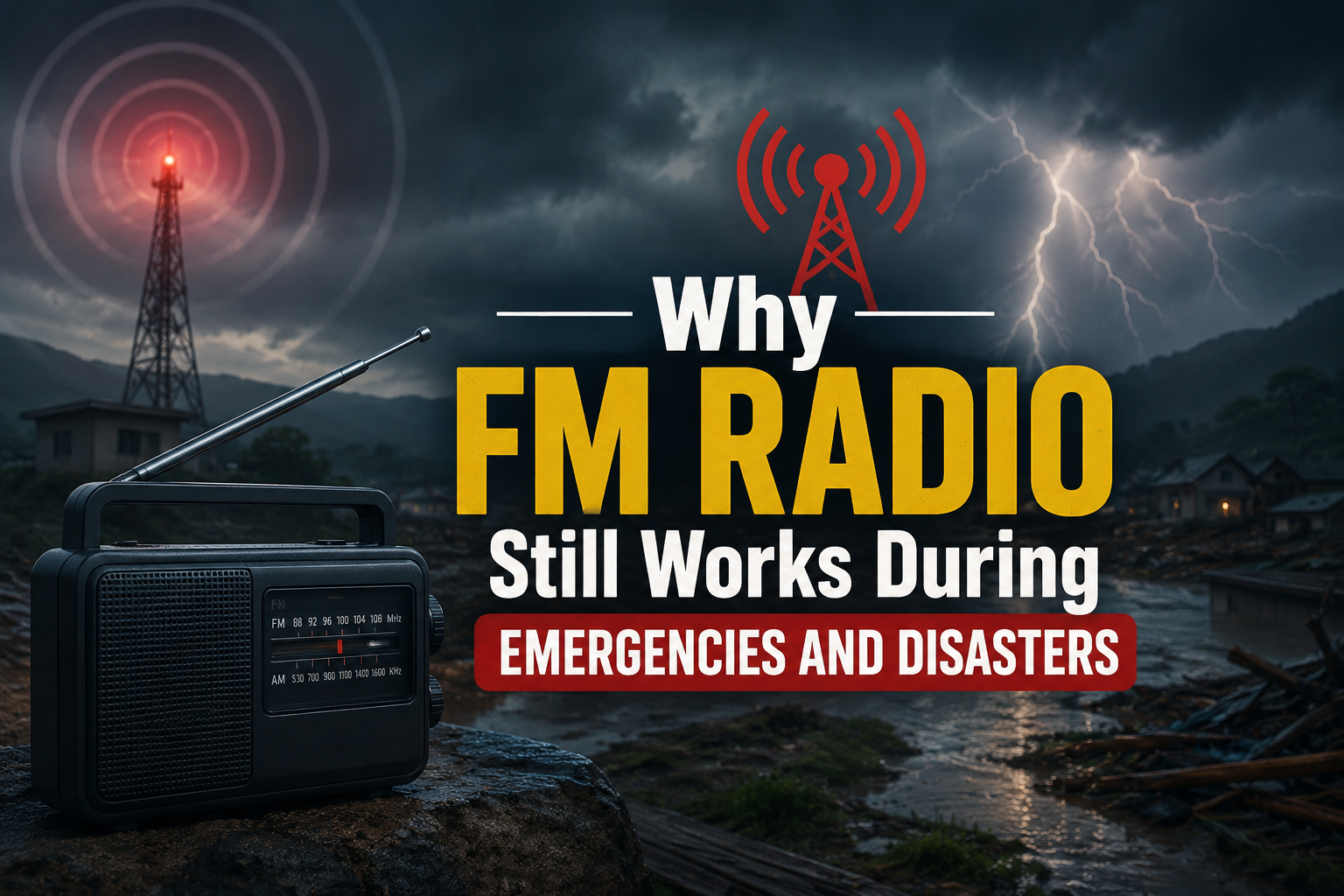
Natural screw-ups, intense climate activities, energy outages, earthquakes, floods, cyclones, and one-of-a-kind emergencies can disrupt present-day communication structures in minutes. Mobile networks also can emerge as overloaded, net services can fail, and power infrastructure can also experience huge interruptions. During the one essential condition, people need reliable right of entry to accurate information that would help them live securely and make informed selections.
Many humans expect that cutting-edge-day smartphones and internet services have truly changed conventional radio. However, records have over and over confirmed that FM radio keeps functioning when many other conversation structures grow to be unavailable. Understanding Why FM Radio Still Works During Emergencies and Disasters allows us to offer a cause in the back of why governments, emergency corporations, disaster management governments, and public safety companies preserve relying on radio broadcasting during crises.
FM radio’s capacity to perform independently of net infrastructure, supply information to huge audiences concurrently, and function through battery-powered receivers makes it uniquely treasured during emergencies. As communication technologies evolve, radio stays one of the most dependable gadgets for emergency preparedness and catastrophe reaction.
What Makes FM Radio Important During Emergencies?
FM radio performs a vital role in some unspecified time in the future in emergencies due to the fact it is able to deliver important records speedily and simultaneously to large audiences. Unlike net-based services that rely on facts, networks, and individual connections, radio actually reaches all people within the coverage location at the identical time.
This makes FM radio one of the most reliable communication equipment within the path of disasters, electricity outages, and network disruptions, assisting agencies to stay knowledgeable and steady.
Key Reasons FM Radio Is Important During Emergencies
- Rapid Information Delivery: Emergency updates may be broadcast right away. This allows human beings to reply briefly to converting situations.
- Wide Audience Reach: A single broadcast reaches plenty of listeners simultaneously. No character network connection is wanted.
- Evacuation Instructions: Radio stations provide steerage on evacuation routes and safety techniques. These statistics can assist in keeping lives.
- Weather and Disaster Alerts: Broadcasters share real-time weather warnings and catastrophe updates. Listeners collect critical records as activities unfold.
- Public Safety Guidance: Authorities use radio to talk about safety guidelines. This permits groups to make knowledgeable alternatives.
- Coordination With Emergency Agencies: Radio stations paint cautiously with authorities and catastrophe response agencies. This ensures correct and set-up statistics reach the general public.
Why Does FM Radio Continue Working When Mobile Networks Fail?
One of the most usual questions within the path of failures is why radio regularly keeps on the same footing at the same time as cellular communication systems enjoy screw-ups. The answer lies inside the important connections between broadcasting infrastructure and mobile network shape.
Mobile networks depend upon masses of interconnected mobile towers, data centers, switching structures, and net infrastructure. During emergencies, the ones’ systems can become overloaded through excessive call volumes, broken via bodily impacts, or disrupted through energy screw-ups. When too many people try to speak concurrently, network congestion regularly reduces carrier reliability.
FM radio operates in any other case. An unmanned transmission tower can broadcast data to tens of thousands of listeners concurrently without requiring man or woman intervention. This broadcasting model lets us provide a cause at the back of Why FM Radio Still Works During Emergencies and Disasters, even if mobile networks become unavailable or unreliable.
How Does FM Radio Transmit Emergency Information So Quickly?
FM radio makes use of a one-to-many communication version that permits data to reach huge audiences almost straight away. Once emergency information enters the broadcasting tool, transmitters distribute the signal all through the station’s insurance area without requiring extra community capability for each listener.
Key Factors Supporting Fast Emergency Broadcasting
- Simultaneous Audience Reach: An unencrypted FM transmission can attain hundreds or possibly plenty of hundreds of listeners at the same time. This permits the government to spread pressing signs and symptoms fast without delays.
- Direct Signal Transmission: FM signs excursions right far away from broadcasting towers to radio receivers. They no longer depend on internet networks or statistics routing systems.
- Real-Time Broadcasting: Emergency records may be shared right away as situations amplify. This ensures people get a perspicacity of the stylish updates without being geared up.
- Minimal Infrastructure Requirements: Listeners most effectively want a simple hi-fi or cell with FM access. No internet connection or complex setup is required to get entry to signals.
- Wide Coverage Areas: High-energy FM transmitters can cowl towns, cities, and rural regions. This makes emergency communication viable all through massive geographic regions.
- Consistent Information Delivery: Every listener gets the same message at the same time. This reduces incorrect facts, confusion, and panic in the course of emergencies.
What Happens to Internet Services During Major Disasters?
During primary failures, net services can end up unreliable because of infrastructure damage and prolonged community downtime. Power outages may also further disable communication devices, even as fiber-optic cables and statistics centers can revel in disruptions.
At the same time, lots and heaps of human beings frequently try to get proper access to information and call family members, growing heavy network congestion. These factors can produce slower net speeds, intermittent connectivity, or transient issue outages.
Key Impacts on Internet Services During Disasters
- Power outages disrupt network systems: Loss of strength can close down routers, cell towers, and different essential internet tools.
- Damage to bodily infrastructure: Fiber-optic cables and network hardware can be destroyed or disconnected due to the direction of screw-ups.
- Data center pressure or failure: Server centers might also, furthermore, experience overloads or operational issues at some unspecified time in the future of emergencies.
- Network congestion due to heavy website visitors: Sudden spikes in customers can overload structures and slow down connectivity.
- Reduced net speed and performance: Even working networks can also grow to be notably sluggish because of immoderate naming for them.
- Temporary or complete issuer outages: In severe cases, internet offerings may additionally, moreover, end up in part or fully unavailable in affected regions.
Can FM Radio Work Without Electricity?
One of the strongest benefits of FM radio in some unspecified time in the future of screw-ups is its compatibility with battery-powered devices. While many communication technologies require non-persistent electric-powered strength, portable radios can maintain operation for the duration of prolonged power outages.
Battery-powered radios, hand-crank radios, solar-powered emergency receivers, and automobile radios offer possible techniques for gaining access to emergency pronouncements. These options permit groups to stay informed even if electric infrastructure reviews disruptions.
Alternative Power Sources for Emergency Radio Access
- Battery-Powered Radios: Portable radios can carry on without family strength for the duration of emergencies. They offer dependable proper entry to records and safety updates at some unspecified time in the future during strength outages.
- Hand-Crank Emergency Radios: These radios generate electricity through a guided-cranking mechanism. They are especially useful during the duration of extended outages while batteries are unavailable.
- Solar-Powered Radios: Built-in solar panels convert daylight hours into usable electric-powered energy. This presents a renewable and sustainable conservation solution through all failures.
- Vehicle Radio Systems: Car radios can maintain functionality using an automobile’s battery gadget. They offer reliable proper access to emergency public services at some unspecified time within the destiny of blackouts.
- Portable Power Banks: Some emergency radios may be recharged by the usage of transportable power banks. This allows amplified walking time even as traditional energy sources are unavailable.
- Generator-Supported Receivers: Emergency centers often use backup generators to power radio devices. This ensures you don’t save yourself; you get proper right of entry to critical records in the direction of prolonged emergencies.
Why Do Governments Include Radio in Emergency Preparedness Plans?
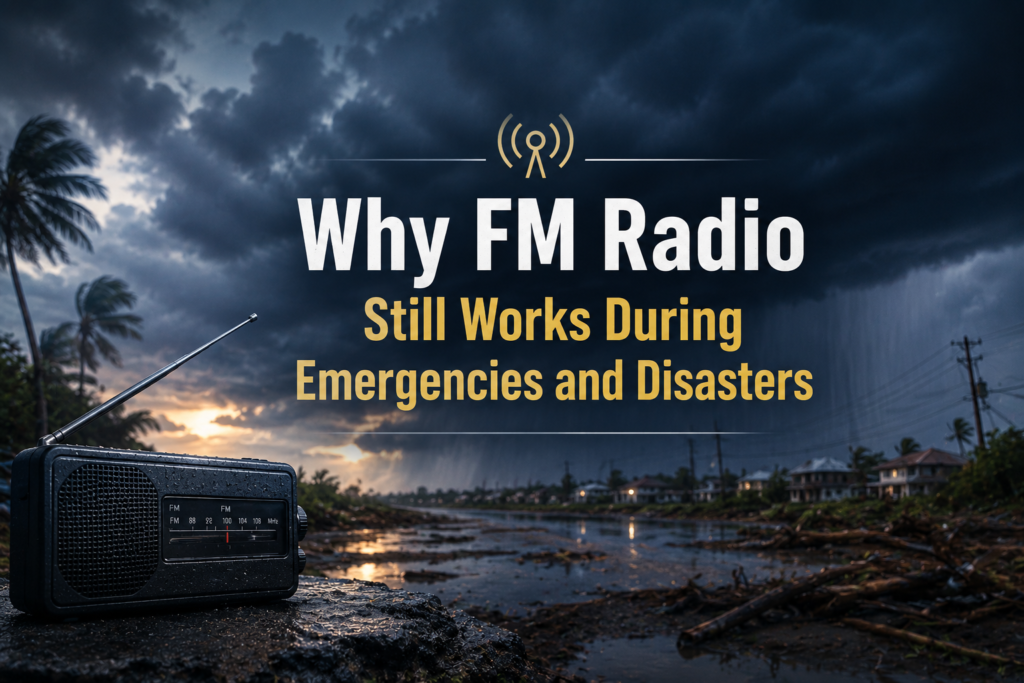
Emergency control agencies consider radio one of the most reliable conversation structures available in the course of failures. Consequently, many governments encompass radio broadcasting as a relevant thing for disaster preparedness and emergency reaction strategies.
Radio stations often gain priority beneficial useful resources in the direction of emergencies because of the fact they serve as important facts distribution channels. Special emergency broadcasting techniques allow governments to interrupt ordinary programming and distribute pressing signs quickly.
Understanding Why FM Radio Still Works During Emergencies and Disasters additionally calls for recognizing the strategic characteristic radio plays in interior, countrywide emergency communication frameworks. Governments keep investing in radio infrastructure due to its examined reliability inside the path of crises.
How Do Emergency Alert Systems Work on FM Radio?
Emergency alert systems enable law enforcement authorities, organizations, climate departments, and catastrophe management agencies to supply vital information immediately through FM radio networks.
When an emergency takes place, these structures can interrupt ordinary programming and right away broadcast urgent bulletins to the general public. Because FM radio reaches massive audiences concurrently, it offers a quick and reliable approach for sharing existence-saving information for the duration of failures, excessive weather events, and specific public protection emergencies.
Common Emergency Alert Information
- Weather Warnings: Alerts are issued for cyclones, storms, floods, and one-of-a-kind excessive weather situations. These warnings assist people in preparing and taking protective measures earlier.
- Evacuation centers: Authorities provide instructions for lead devices that might be in instantaneous danger. Clear evacuation steering lets us reduce hazards and enhance public protection.
- Public Safety Advisories: Emergency announcements tell citizens approximately risks and recommended precautions. These statistics permit agencies to reply as they should to changing situations.
- Road Closure Updates: Radio signals offer facts about approximately blocked roads and transportation disruptions. This allows tourists to find out safe routes and avoid risky regions.
- Shelter Locations: Emergency proclamations announce the places of brief shelters and relief centers. People can quickly discover solid hotels and essential help services.
- Rescue Coordination Information: Updates from emergency reaction organizations keep the overall public informed about rescue efforts. These bulletins help companies stay aware of ongoing emergency operations.
Why Are Battery-Powered Radios Recommended for Disaster Preparedness?
Emergency preparedness professionals regularly advocate keeping battery-powered radios in the inner circle of relatives’ emergency kits. These gadgets offer dependable proper access to data while one or another type of verbal exchange system becomes unavailable.
Unlike smartphones, which require network connectivity and normal charging, portable radios can feature independently for extended durations. Their simplicity, reliability, and espresso-electric necessities make them mainly beneficial throughout prolonged emergencies.
This recommendation right away allows the concept of Why FM Radio Still Works During Emergencies and Disasters, due to the truth that getting right of entry to emergency declarations frequently relies upon having functioning radio receivers available.
How Do Radio Stations Prepare for Emergencies?
Radio stations spend money on entire emergency preparedness plans to ensure they’re capable of preserving broadcasting inside the path of disasters and distinct essential situations. Maintaining reliable communication is crucial at the same time as groups rely on properly timed facts for safety and choice-making.
To minimize service interruptions, broadcasters put into effect backup structures, teach a body of human beings, and coordinate intently with emergency reaction companies. These measures help make sure that critical updates live to be had even under hard situations.
Emergency Preparedness Announcements via Radio Stations
- Backup Power Generators: Generators provide electricity while the primary energy delivery is unavailable. This permits radio stations to hold broadcasting for the duration of energy outages.
- Redundant Transmission Systems: An alternative transmission device serves as a backup if primary systems fail. This enables holding uninterrupted broadcasting in the direction of emergencies.
- Emergency Broadcasting Protocols: Station installation and clean methods for managing urgent public bulletins. These protocols allow speedy and accurate statistics distribution.
- Staff Training Programs: Employees receive education on disaster communication and emergency operations. This ensures a group of workers can respond efficiently throughout crucial situations.
- Alternative Studio Locations: Backup centers are available if the present studio becomes inaccessible. Broadcasters can preserve operations from a secondary vicinity while they are important.
- Coordination With Authorities: Radio stations’ artwork cautiously manipulates emergencies and authorities’ organizations. This cooperation allows supplying correct and nicely timed records to the general public.
What Types of Disasters Highlight the Importance of FM Radio?
Many natural and human-made screw-ups have examined the critical function FM radio plays, finally, in emergencies. Earthquakes, hurricanes, floods, wildfires, tsunamis, and severe storms have over and over shown why FM radio still works during emergencies and disasters even as different verbal exchange structures face disruptions.
Its capability to provide real-time updates, emergency instructions, and public protection announcements makes it an invaluable deliverer of records. These sports keep awareness of the significance of FM radio as a reliable emergency communication platform internationally.
Disasters That Demonstrate the Importance of FM Radio
- Earthquakes: Earthquakes can damage communication infrastructure and cause enormous power outages. FM radio enables sending emergency instructions and protection updates to affected organizations.
- Hurricanes and Cyclones: Strong winds and flooding can disrupt internet and cellular networks. Radio broadcasts offer non-forestall climate updates and evacuation facts.
- Floods: Flooding can isolate groups and damage conversation systems. FM radio lets in percentage rescue facts, street closures, and safe haven locations.
- Wildfires: Rapidly spreading fires require well-timed evacuation and safety bulletins. Radio lets the government talk about changing situations in real time.
- Tsunamis: Coastal populations need straightforward warnings and evacuation guidance. FM radio can speedily broadcast critical symptoms in big regions.
- Severe Storms and Tornadoes: Extreme climate events frequently create sudden and dangerous situations. Radio stations offer peril updates to assist people in living informed and securely.
- Remote Area Emergencies: Rural and remote areas may additionally have restrained communication alternatives. FM radio remains a reliable deliverer of data even as other offerings are unavailable.
- Large-Scale Infrastructure Failures: Power grid disruptions and network outages can have an effect on digital verbal exchange systems. Radio maintains functioning via backup electricity and unbiased transmission networks.
Will FM Radio Remain Important in the Future?
Although the virtual communication era is preserved increasingly, FM radio is predicted to leave an important issue of emergency communication structures. Its simplicity, reliability, and independence from internet infrastructure offer blessings that may be hard to update in reality.
Future emergency communication systems will likely combine conventional broadcasting with the digital era. Hybrid strategies can enhance records distribution at the same time as retaining radio’s strengths, ultimately, in infrastructure disasters. As catastrophe preparedness techniques evolve, radio will preserve supporting public protection via reliable verbal exchange services and rapid emergency information transport.
Conclusion
Understanding why FM radio still works during emergencies and disasters well shows the particular strengths that have made radio one of the most dependable communication technologies for many years. Its capability to carry out tasks independently of net infrastructure, benefit massive audiences simultaneously, and be a true battery-powered gadget makes it beneficial in the event of disaster situations.
When cell networks become overloaded, net services revel in disruptions, or electricity outages have an effect on conversation structures, FM radio frequently maintains offering essential records to affected businesses. Governments, emergency organizations, and disaster control corporations maintain reliance on radio because of its confirmed effectiveness sooner or later in emergencies.
As the era advances, FM radio remains an essential problem of emergency preparedness and public safety planning. Learning Why FM Radio Still Works During Emergencies and Disasters highlights the iconic importance of broadcasting infrastructure in defensive groups and assisting effective catastrophe response efforts.
Explore Our Recent Blogs
- How Internet Speed Affects Online Radio Streaming Quality?
- Why Some FM Stations Are Clearer Than Others in Your Area?
- How FM Radio Frequencies Are Assigned in India?
- What Happens Inside a Radio Broadcasting Studio?
- How Live Radio Shows Are Broadcast Without Delay?
Frequently Asked Questions
1. Why does FM radio continue working during emergencies?
FM radio uses broadcasting infrastructure that operates independently of net services and cellular networks. An unmarried transmitter can obtain large audiences simultaneously without requiring personal network connections. This makes radio exceedingly reliable throughout emergencies.
2. Can FM radio work without electricity?
Yes, many portable radios carry out functions using batteries, sun strength, hand-crank charging structures, or vehicle energy components. These alternatives permit getting entry to emergency programs in the course of energy outages. This capability makes radio especially precious inside the path of failures.
3. Why do mobile networks often fail during disasters?
Mobile networks can become overloaded at the same time as large numbers of humans attempt to speak concurrently. Physical infrastructure harm and energy disruptions also can have an effect on company availability. These factors can reduce network reliability at some point during emergencies.
4. What information do emergency radio broadcasts provide?
Emergency proclamations normally embody climate warnings, evacuation instructions, road closure updates, shelter facts, public safety advisories, and rescue operation announcements. These updates assist communities in responding effectively to evolving situations.
5. Are emergency radios different from regular radios?
Many emergency radios combine abilities with hand-crank generators, solar charging talents, climate alert structures, and integrated flashlights. These enhancements improve reliability in the direction of disaster conditions. However, famous FM radios can also keep up with emergency pronouncements.
6. Will FM radio remain relevant despite digital technology?
Yes, FM radio continues providing blessings that digital structures can’t virtually update in the path of emergencies. Its independence from internet infrastructure and functionality to acquire large audiences briefly ensure its ongoing relevance in emergency communication systems.