Radio has been one of the most influential media technologies for lots many years. Even with the rise of online streaming systems and digital entertainment, radio broadcasting remains important for song, news, schooling, and emergency communication. Understanding the Difference Between AM and FM Radio Explained for Beginners allows humans to analyze the way the ones broadcasting strategies, artwork, and why they provide wonderful listening reminiscences.
Many people often use the radio but might not definitely understand the technical differences between AM radio and FM radio. While both techniques transmit audio indicators using radio waves, they range in sound extremely good, signal strength, frequency usage, and coverage range. Understanding the Difference Between AM and FM Radio Explained for Beginners makes it much less complicated to pick the right broadcasting kind for various situations.
What Are AM and FM Radio Signals?
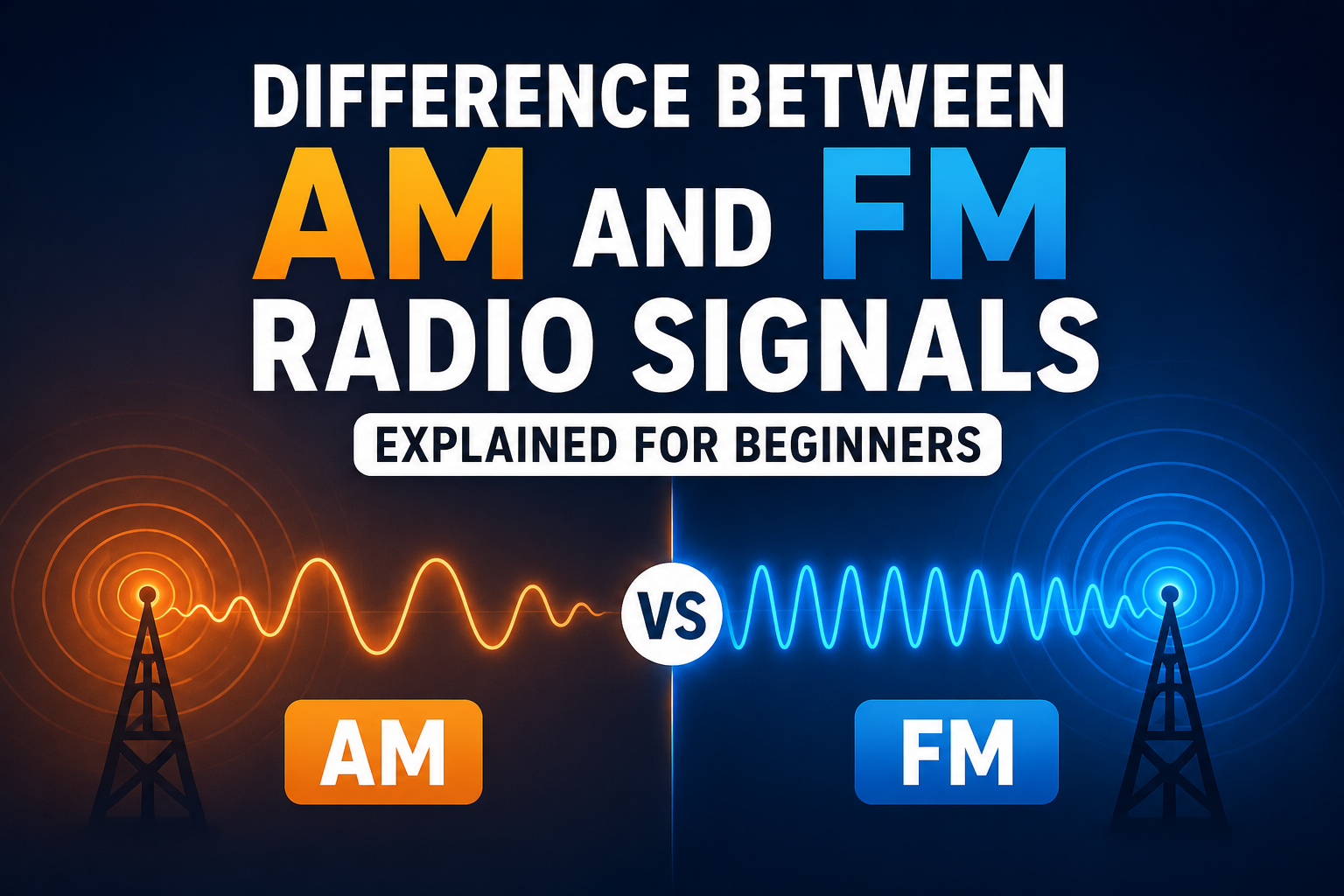
AM stands for Amplitude Modulation, whilst FM stands for Frequency Modulation. Both technologies are designed to transmit sound signals via radio waves, but they use different strategies to keep audio information. AM adjusts the energy or amplitude of the signal, while FM changes the signal frequency whilst retaining its amplitude regular.
AM radio turned into advanced earlier and has become extensively used for information announcements and long-distance communication. FM generation arrived later and acquired recognition because of its advanced sound quality and reduced interference. Understanding those smooth concepts is essential, even as learning the Difference Between AM and FM Radio Explained for Beginners.
Key Characteristics of Radio Signals
- Signal Transmission: AM and FM radio structures use electromagnetic radio waves to deliver audio content from broadcasting stations to receivers. Both technologies depend upon transmitters, antennas, and signal processing systems to ensure smooth communication and audio transport.
- Frequency Allocation: AM and FM broadcasting feature on terrific frequency stages to keep away from sign overlap and hold clean transmission. Proper frequency allocation permits a couple of stations to feature successfully with out inflicting interference.
- Broadcast Purpose: AM radio is commonly used for information, discussions, sports activities, sports statements, and informational programmes. FM radio specially focuses on music, leisure, movie big names, and awesome audio broadcasting.
- Coverage Differences: Signal journey distance varies depending on broadcasting techniques, transmission power, and environmental conditions. AM signs and symptoms usually cover large areas, while FM offers a stronger community reception.
- Technology Usage: Modern broadcasting systems are increasingly combining traditional radio era with virtual structures and online streaming services. This integration expands the goal market reach and improves accessibility.
- Listener Experience: Sound great, signal balance, and reception are ordinary; overall performance varies notably between AM and FM broadcasting. These factors straight away have an impact on how listeners revel in radio content in exceptional environments.
Difference Between AM and FM Radio Explained for Beginners: Core Comparison
Understanding the Difference Between AM and FM Radio Explained for Beginners becomes an entire lot tons much less tough by the use of evaluating how each broadcasting technology transmits audio signals. Although AM and FM radio serve the identical cause of transmitting sound through radio waves, they use clearly first-rate transmission strategies.
AM radio adjusts the amplitude (signal strength) to keep audio facts, whilst FM radio modifies the frequency of the signal without changing its amplitude. This technical distinction at once affects signal excellence, listening experience, and the overall performance of the preferred standard. FM radio normally offers clearer sound, fantastic, stronger noise resistance, and better audio overall performance for music broadcasting.
In assessment, AM signs can journey lots extra distances and cover wider regions, making them useful for information and long-range verbal exchange. However, AM pronunciations are much more likely to be affected by interference from weather conditions, electric-powered devices, and environmental disturbances. These variations provide a reason why FM radio is broadly favored for amusement and music, whilst AM radio remains important for information, communication, and informational broadcasting.
Sound Quality Differences Between AM and FM
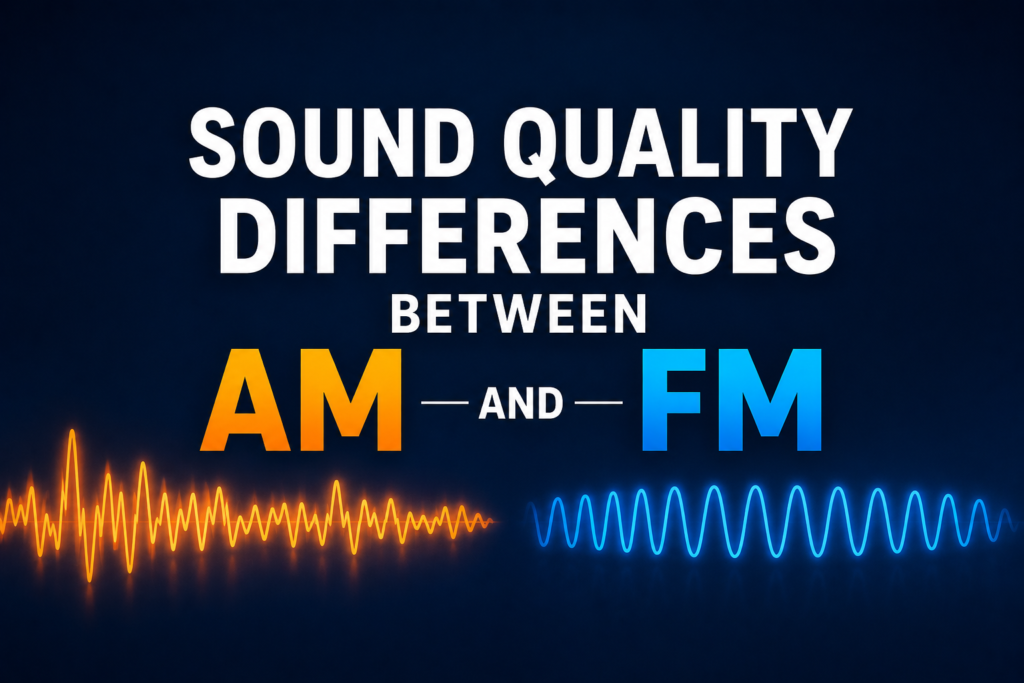
Sound quality is absolutely certainly one of the most important aspects amongst AM and FM broadcasting generations and plays a major role in listener choice. FM radio usually offers richer, clearer, and more specific audio as it makes use of frequency modulation, which permits less static noise and signal interference. This allows listeners to enjoy smoother sound, making FM mainly appropriate for tune channels and amusement programmes.
AM radio, alternatively, typically has decreased audio bandwidth and is more vulnerable to environmental interference and electrical disturbances. Background noise, sign distortion, and static sounds are extra common with AM broadcasts, particularly in crowded or noisy environments.
While AM remains effective for speech-based content material, FM era is commonly desired for song broadcasting due to its advanced sound quality, performance, and higher listening experience.
Audio Quality Comparison Factors
- Noise Resistance: FM radio reduces signal interference more effectively than AM radios with the aid of frequency modulation. This permits a decrease in static sounds and outside disturbances, resulting in clearer and stronger audio.
- Music Clarity: FM offers richer and better sound, making it perfect for songs and amusement programmes. The advanced audio detail creates an extra thrilling listening experience for track fans.
- Signal Distortion: AM indicators are extra at risk of environmental interference and electric disturbances. Weather conditions, digital devices, and nearby structures will have an impact on signal transmission and create undesirable noise.
- Frequency Stability: FM maintains a more potent signal balance at some point of transmission because frequency changes are less suffering from outside interference. This allows ordinary audio to be splendid in some unspecified time in the future of broadcasting.
- Voice Broadcasting: AM radio plays correctly for speech-based totally absolutely content, which includes data, discussions, and talk programmes. Voice transmissions are understandable even though the audio quality is lower than FM.
- Listener Comfort: FM affords a smoother and extra superb listening experience because of its clearer sound and reduced static interference. This makes extended listening periods greater snug and attractive for audiences.
Signal Range and Coverage Area
Signal excursion distance is another principal detail in understanding the Difference Between AM and FM radio, explained for Beginners. The kind of radio signals is primarily based on how broadcasting waves interact with the surroundings, land surfaces, and the surrounding environmental situations. Since AM and FM use tremendous transmission strategies and frequency ranges, they behave differently at the same time when traveling over long distances.
AM indicators typically adventure a good deal farther due to the fact that they perform at lower frequencies and may propagate through ground-wave and sky-wave propagation. These symptoms can bend around obstacles and even reflect from layers of the environment, permitting them to cover large geographical areas. This functionality makes AM radio distinctly powerful for prolonged-distance conversation, information broadcasting, and reaching faraway regions.
FM signals are specifically excited in right-line paths and rely closely on the transmission tower top and broadcasting infrastructure. Obstacles consisting of tall homes, mountains, and dense city systems can lessen FM signal power extra with out trouble than AM alerts. However, FM compensates for shorter coverage distances by way of offering more potent network reception, better sound readability, and advanced audio superb for nearby listeners.
Uses of AM and FM Broadcasting Today
Modern radio broadcasting continues to use every AM and FM system due to the fact that each serves splendid communication and amusement functions. Although newer virtual structures and streaming generations have emerged as popular, AM and FM broadcasting play a large role in attaining global audiences. Their unique capabilities permit broadcasters to deliver content primarily based mostly on listener desires, insurance necessities, and programme types.
AM radio stations are typically used for public announcements, emergency communication, public company bulletins, sports statements, political discussions, and real-time information updates. Due to their long-distance sign abilities, AM broadcasts are especially effective for conveying essential facts in wider areas, specifically during emergencies and public interest campaigns.
FM broadcasting, as an alternative, dominates song channels and entertainment-focused programming. FM stations usually broadcast Bollywood songs, movie star interviews, local cultural programmes, comedy shows, and interactive RJ lessons. Many broadcasters now integrate conventional radio transmission with online streaming systems and cellular programs, helping them increase purpose marketplace reap and create more flexible listening experiences in the virtual generation.
Advantages and Limitations of AM and FM Radio
Benefits of AM Radio
- Long-Distance Coverage: AM signals travel farther and cover larger areas.
- Lower Infrastructure Costs: Transmission devices will be lots less costly.
- Useful for News: Speech-primarily based content fabric works correctly on AM systems.
Benefits of FM Radio
- Superior Sound Quality: FM offers cleaner and richer audio.
- Reduced Interference: Frequency modulation limits signal disturbance.
- Better Music Broadcasting: Ideal for leisure and songs.
Common Limitations
- AM Noise Issues: AM is susceptible to interference.
- FM Coverage Challenges: Obstacles can lessen signal strength.
- Infrastructure Dependence: Both require broadcasting towers and frequency management.
Conclusion
Understanding the Difference Between AM and FM Radio Explained for Beginners facilitates supplying a cause for why each broadcasting technology continues to serve special communication and amusement goals even in recent times. AM radio stays appreciably valuable for prolonged-distance communique, data broadcasts, emergency alerts, and informational content because of its wider coverage. In assessment, FM radio sticks out with superior sound quality, reduced interference, and a richer listening experience that makes it ideal for track and entertainment programmes.
Although virtual platforms and streaming offerings are increasing rapidly, radio broadcasting remains applicable because of its accessibility, reliability, and wide appeal. Learning the Difference Between AM and FM Radio Explained for Beginners presents a clearer understanding of how the radio era works and why every structure preserves connecting tens of hundreds of thousands of listeners around the globe through information, song, and real-time conversation.
Explore Our Recent Blogs
- How FM Radio Signals Work and Reach Different Cities in India
- Best Lucknow Radio Stations for News and Bollywood Songs
- Top FM Channels in Ahmedabad for Gujarati Music Lovers
- Best Radio Stations in Pune for Daily Entertainment
- Top Radio Stations in Kolkata You Can Listen to Online
FAQs
1. What is the principal distinction between AM and FM radio?
The primary distinction between AM and FM radio lies in the approach used to transmit audio alerts. AM (Amplitude Modulation) modifies the amplitude of the signal, while FM (Frequency Modulation) adjusts the frequency of the signal. This distinction creates fundamental variations in sound extraordinary, sign stability, and commonplace listening experience.
2. Why does FM sound higher than AM?
FM radio presents higher sound quality due to the fact that it has miles greater evidence in competition to interference and less noise in the past. Frequency modulation allows for clearer and similarly robust audio transmission as compared to AM structures. This makes FM mainly suitable for track broadcasting and leisure programmes.
3. Why can AM indicators tour farther?
AM alerts function at decreased frequencies, permitting them to travel over longer distances through floor and atmospheric wave propagation. They can reflect off layers of the surroundings and cover wider geographical regions. This capability makes AM radio beneficial for long-distance communication and statistical broadcasting.
4. Which radio type is better for the track?
FM radio is normally taken into consideration higher for music as it gives higher sound quality and clearer audio output. It offers richer sound information with a good deal less static interference within the course of transmission. This is why most track and leisure stations pick out FM broadcasting.
5. Is AM radio still used in recent times?
Yes, AM radio continues to stay vital even in the modern-day virtual age. It is substantially used for information updates, sports commentary, public communication, emergency alerts, and speaking programmes. Its long-distance insurance makes it valuable for conducting broader audiences.
6. Can cellular telephones receive AM and FM radio?
Many smartphones can get hold of FM radio via integrated chips, dedicated apps, or linked headphones appearing as antennas. AM radio beneficial and useful resource that is a great deal much less commonplace and is regularly accessed via net-based totally radio services. Modern radio packages, moreover, permit customers to move each AM and FM station online.