
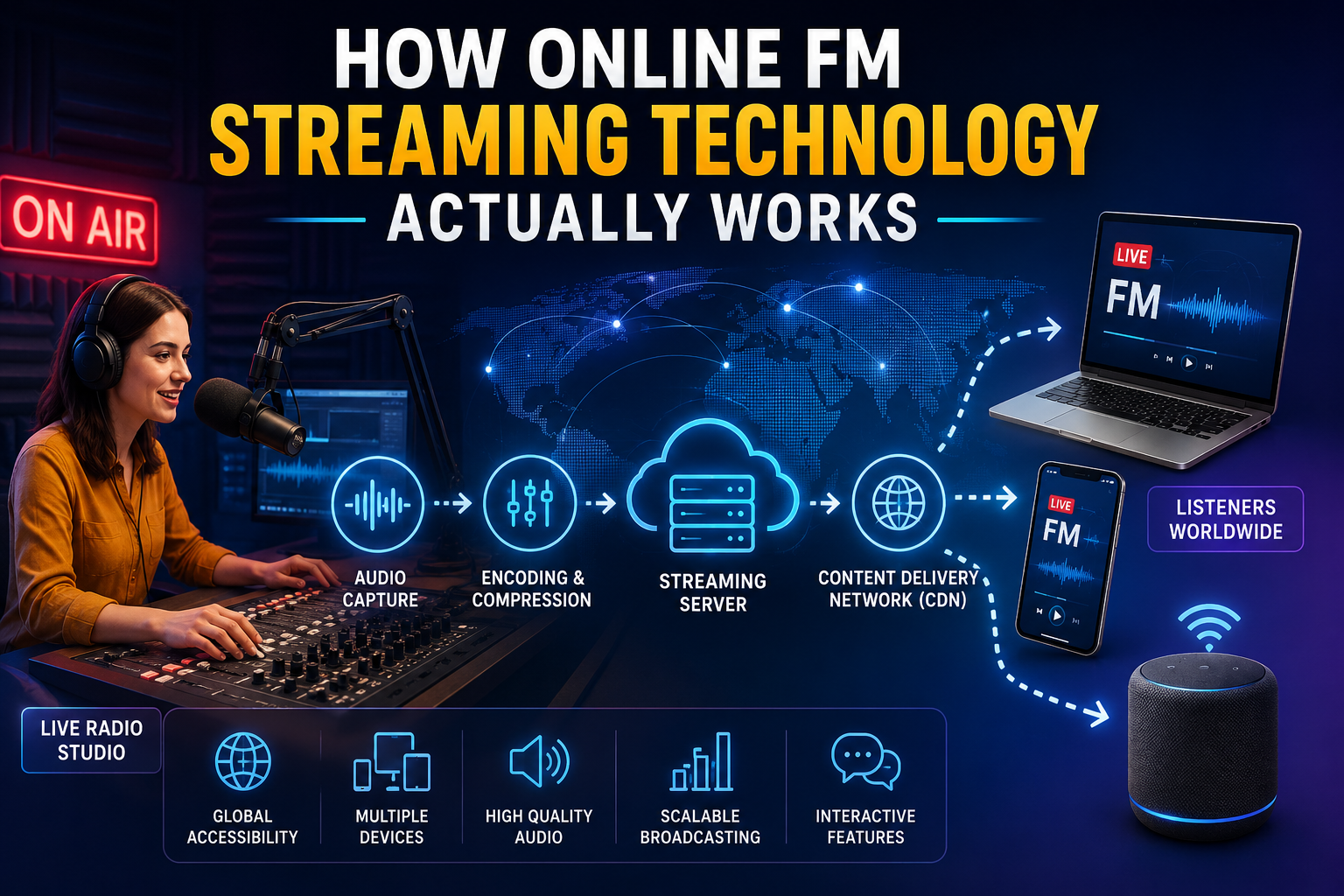
Radio broadcasting has converted extensively to virtual technology, converting the manner humans consume audio content internationally. Traditional FM broadcasting as soon as depended definitely on radio towers, antennas, and local transmission systems to supply signs to close with the aid of listeners. Today, the era has prolonged past bodily barriers, allowing audiences to get access to radio content from nearly anywhere with the use of internet-linked gadgets.
Understanding How Online FM Streaming Technology Actually Works lets in provide an reason for the technique that allows radio stations to broadcast live audio seamlessly throughout towns, countries, and international audiences. The speedy growth of smartphones, high-speed internet, internet radio systems, and mobile programs has significantly modified listener behaviour. Modern streaming generation now allows radio stations to provide uninterrupted audio tales without depending on conventional signal transmission techniques.
Learning How Online FM Streaming Technology Actually Works gives a precious perception into the advanced systems, digital infrastructure, and generation responsible for growing clean and handy online radio critiques for listeners anywhere.
What Is Online FM Streaming Technology?
Online FM streaming refers to the technique of handing over live radio content through the internet in place of relying primarily on traditional FM frequencies and transmission towers. Unlike traditional broadcasting, wherein radio signals journey via antennas and network transmission systems, online radio allows listeners to gain proper access to content through websites, mobile applications, smart devices, and internet radio systems. This generation has removed geographical barriers and made radio more accessible than ever before.
With the fast increase of internet connectivity and digital media systems, radio stations can now acquire global audiences in real time. Instead of depending mostly on neighborhood broadcasting infrastructure, online FM streaming makes use of the internet-based era to supply clean and uninterrupted listening critiques. Understanding this device is critical, even as getting to know How Online FM Streaming Technology Actually Works, as it underpins the inspiration of present-day virtual broadcasting.
Key Elements of Online Radio Systems
- Live Audio Broadcasting: Audio signals are captured from studios and organized for virtual transmission using broadcasting software programs and specialized hardware systems. This guarantees listeners gather actual-time content effortlessly.
- Streaming Servers: Dedicated streaming servers distribute radio content to loads of related listeners simultaneously. These structures manipulate audio shipping and hold continuous circulate usual performance.
- Internet Connectivity: Stable network connections assist uninterrupted audio transmission and easy playback research. Strong networks help lessen buffering and streaming delays.
- Encoding Technology: The audio compression era converts large audio files into optimized formats appropriate for internet transmission. This way improves usual performance and minimizes bandwidth intake.
- User Devices: Smartphones, capsules, laptop structures, smart TVs, and voice-enabled devices keep of and play online radio streams. Device compatibility allows the growth of the target market accessibility.
- Cloud Infrastructure: Modern radio structures increasingly use cloud-based systems for flexibility, scalability, and basic universal overall performance optimization. The cloud era allows stations to control huge audiences correctly.
How Online FM Streaming Technology Actually Works: Step-by-Step Process
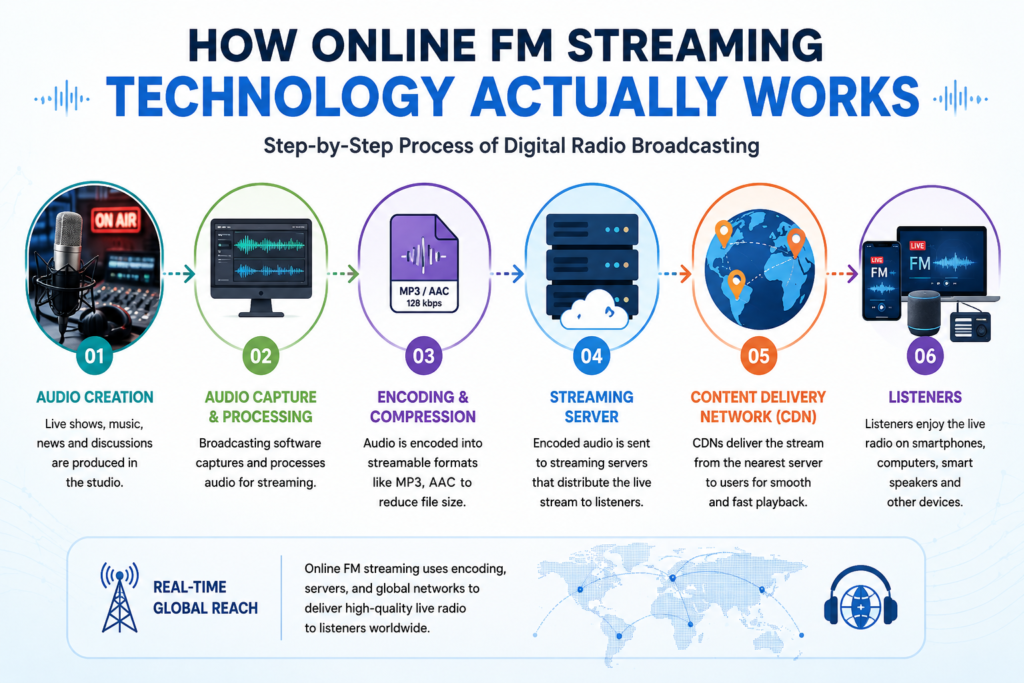
Understanding How Online FM Streaming Technology Actually Works becomes an lousy lot less hard at the same time as reading the complete device involved in cutting-edge digital broadcasting. Unlike traditional FM systems that depend mostly on transmission towers and radio frequencies, online FM streaming follows a technology-driven workflow that converts live audio into a virtual content fabric. The approach starts offevolved indoors radio studios in which presenters, songs, interviews, advertisements, and live discussions generate audio content for broadcasting.
Once the content material is prepared, specialized broadcasting software captures and transcodes the audio for internet delivery. Advanced software application systems help control sound terrific, extent tiers, and stay programme scheduling earlier than transmitting the content material fabric. This initial diploma ensures that audio is prepared nicely for smooth digital distribution and uninterrupted streaming of the usual performance.
After audio production, the encoding era converts uncooked sound into digital formats appropriate for online transmission. Encoders compress big audio documents into streaming codecs, which include MP3, AAC, OGG, or distinctive optimized formats. Audio compression reduces report length while keeping excellent, making internet transmission quicker and, in addition, less taxing for listeners through the use of top-notch community speeds.
Audio Encoding and Compression Technology
Audio encoding plays a vital role in online radio streaming systems due to the fact that raw audio files include big portions of information and can not be transmitted successfully over the net. Before audio reaches listeners, broadcasting systems convert and compress the sound into optimized digital codecs appropriate for streaming. This method ensures that radio content material may be delivered short on the identical time as preserving splendid audio superb in some unspecified time in the future of unique internet speeds and devices.
Compression generation reduces record length without notably affecting sound readability or ordinary listening. Smaller record sizes require a bargain less bandwidth and assist in improving playback average performance for customers with varying network situations. Understanding this method is vital while mastering How Online FM Streaming Technology Actually Works, because the truth audio encoding directly influences drift, incredible tempo, and character experience.
Common audio formats utilized in online streaming include MP3, AAC, OGG, and several streaming formats designed in particular for real-time transmission. These eras help optimize audio transport and reduce buffering delays within the path of playback. Efficient encoding structures ensure that listeners experience easy and uninterrupted radio streaming irrespective of the vicinity or the kind of tool.
Important Audio Processing Features
- Compression Efficiency: Audio documents are compressed into smaller sizes without causing primary high-quality loss. This approach permits enhancing streaming velocity and transmission, simple, usual performance.
- Bandwidth Optimization: Streaming structures reduce internet information usage through optimized encoding strategies. Lower bandwidth consumption helps smoother streaming critiques.
- Adaptive Streaming: Modern structures robotically alter audio quality in line with available internet speed. This allows for uninterrupted playback even in the course of community fluctuations.
- Low Latency Performance: Faster transmission generation reduces delays between broadcasting and listener playback. Lower latency improves real-time listening evaluations.
- Playback Compatibility: Streaming formats guide smartphones, computers, capsules, smart audio devices, and exceptional related devices. Broad compatibility will increase accessibility.
- Sound Quality Management: Audio structures continuously hold balanced sound output and are normal and terrific at some point of streaming. This creates a more excellent and professional listening experience.
Role of Streaming Servers and Content Delivery Networks
Streaming servers act due to the fact the number one distribution systems of online radio broadcasting and play a top function in delivering uninterrupted audio content to listeners. Once audio files are encoded and transformed into streamable formats, they’re dispatched to dedicated servers that control and distribute content in real time. These servers make sure that more than one client can be part of and listen simultaneously without affecting the flow or fine-tuning ordinary performance.
Strong server infrastructure is crucial because online radio stations often address hundreds of listeners at the same time. Efficient server structures assist save you delays, interruptions, and connection failures for the duration of periods of excessive intention marketplace website traffic. Understanding this approach is vital whilst mastering How Online FM Streaming Technology Actually Works, as servers shape the spine of virtual radio delivery.
Many modern-day broadcasting structures additionally depend on Content Delivery Networks (CDNs) to improve tempo and standard performance. CDNs distribute streaming content material fabric thru more than one nearby servers located in awesome geographical areas. Instead of sending information from one vital location, content material is added from the closest available server to the listener.
Devices Used for Online FM Streaming
Modern online radio systems are a type of devices that allow listeners to access content from anywhere. Smartphones live a number of the most famous streaming devices because mobile applications offer short and available get proper of get entry to to to heaps of online radio stations. Their portability lets users concentrate at the same time as visiting, running, working out, or having fun.
As the era keeps evolving, online FM streaming is not restricted to mobile devices on my own. Computers, capsules, clever televisions, associated cars, and voice-enabled smart audio systems now help internet radio offerings. This developing compatibility allows listeners to revel in content material fabric sooner or later of a couple of virtual environments.
The growth of tool integration displays how broadcasting technology continues adapting to changing customer behaviour. As ecosystems turn out to be more associated, listeners can seamlessly transfer between gadgets without interrupting their radio experience, making online streaming more flexible and handy than ever before.
Benefits of Online FM Streaming Technology
Online FM streaming technology has converted how listeners consume radio content material by means of the usage of using making broadcasting more bendy, available, and green. Unlike traditional radio structures that depend cautiously on transmission towers and geographical coverage limits, online streaming allows customers to access radio content from almost anywhere with a web connection. This advancement has stepped forward comfort for listeners and increased the target market achievement for broadcasters internationally.
As the virtual era continues evolving, streaming systems provide several benefits that enhance each broadcaster’s overall performance, and purchasers enjoy. Understanding those advantages enables offer a purpose behind why online radio structures are becoming more and more famous, and the way How Online FM Streaming Technology Actually Works permits modern listening conduct.
Major Advantages of Streaming Systems
- Global Accessibility: Listeners can get access to radio stations from everywhere within the globe without geographical boundaries. This allows broadcasters to obtain global audiences beyond conventional coverage areas.
- Flexible Listening: Users can experience radio content fabric via smartphones, computer systems, tablets, smart audio systems, and associated devices. This flexibility lets in listening every time and everywhere.
- Improved Sound Quality: Digital streaming structures often offer clearer and more stable audio performance than conventional broadcasting techniques. Reduced interference improves everyday listening first-rate.
- Scalable Broadcasting: Online systems permit radio stations to serve lots or possibly tens of tens of millions of listeners simultaneously. This scalability supports a larger target market boom.
- Lower Infrastructure Dependency: Internet streaming reduces dependence on high-priced transmission towers and physical broadcasting infrastructure. This permits lower operational boundaries.
- Interactive Features: Modern systems help with stay chats, tune requests, target marketplace engagement devices, and social media integration. These features create a more interactive and personalized listening experience.
Conclusion
Understanding How Online FM Streaming Technology Actually Works gives precious belief into the advanced systems powering contemporary radio studies in the virtual world. Unlike traditional broadcasting techniques, online streaming combines audio encoding, network infrastructure, cloud computing, streaming servers, and digital transmission technology to supply seamless and uninterrupted content to listeners around the globe. This blanketed generation makes radio more bendy, available, and experienced than ever before.
As virtual transformation continues to reshape the media panorama, radio stations are increasingly adopting net-based absolutely completely systems to increase market benefit and enhance listener engagement. Learning How Online FM Streaming Technology Actually Works enables explain why online streaming generation continues to play a fantastic function in the destiny of broadcasting, developing more connected, interactive, and available listening experiences for audiences worldwide.
Explore Our Recent Blogs
- Difference Between AM and FM Radio Explained for Beginners
- How FM Radio Signals Work and Reach Different Cities in India
- Best Lucknow Radio Stations for News and Bollywood Songs
- Top FM Channels in Ahmedabad for Gujarati Music Lovers
- Best Radio Stations in Pune for Daily Entertainment
FAQs
1. What is online FM streaming generation?
The online FM streaming era permits radio stations to broadcast audio content material fabric thru net networks in place of relying on conventional FM frequencies. It converts live radio audio into virtual records that can be transmitted online. Listeners can get proper access to the one streams via websites, cell packages, smart gadgets, and internet radio systems.
2. How does online radio vary from traditional FM?
Traditional FM radio is based on transmission towers and radio frequencies to broadcast alerts in network areas. Online radio makes use of internet connectivity and digital streaming structures to deliver content globally without geographical limitations. This allows listeners to get access to radio stations from absolutely anywhere.
3. Why do streaming systems compress audio?
Streaming systems compress audio files to reduce their period and optimize bandwidth usage for the duration of transmission. Smaller files require much less internet bandwidth and might load more efficiently for customers. This gadget lets you provide smoother playback, faster streaming speeds, and reduced buffering issues.
4. What gadgets guide online FM streaming?
Many modern-day gadgets help online FM streaming, which includes smartphones, computers, tablets, smart televisions, smart audio gadgets, and associated cars. Dedicated programs and internet structures make having access to online radio easy on a couple of gadgets. This flexibility allows listeners to revel in radio content material whenever and everywhere.
5. Can net velocity have an impact on radio streaming?
Yes, internet velocity at once influences streaming quality and playback performance. Slow or risky network connections can cause buffering, interruptions, or lower audio quality. Faster and more stable internet connections help ensure uninterrupted streaming and a better listening experience.
6. Is online radio converting traditional FM?
Online radio is developing due to its accessibility, flexibility, and international reach. However, conventional FM broadcasting remains critical and is considerably used in many areas for community communication and amusement. Both systems currently work collectively to serve terrific listeners’ wishes and alternatives.