
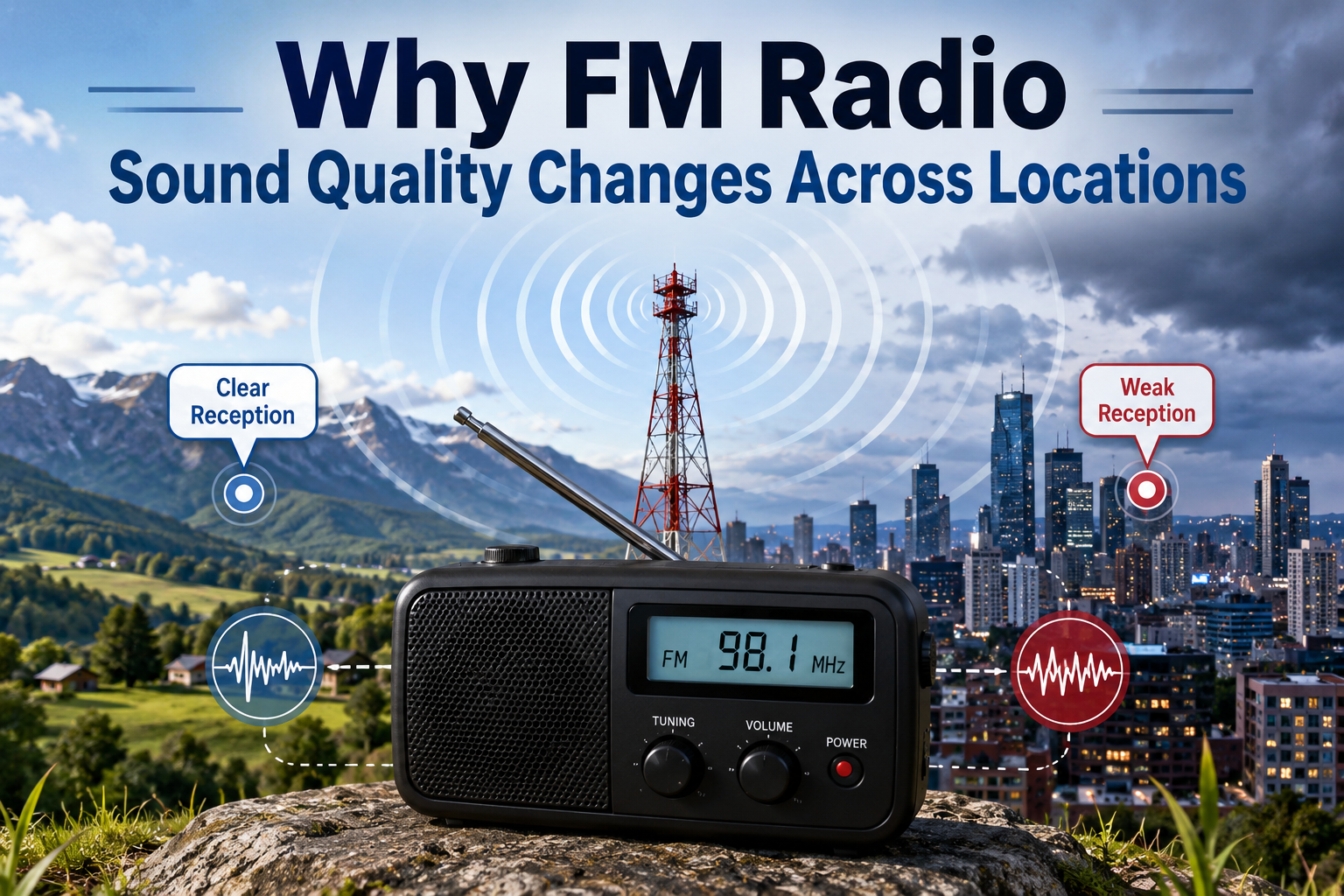
FM radio remains one of the most substantially used broadcasting genres for music, facts, and live entertainment across the world. Despite the speedy increase of digital structures, online streaming offerings, and clever gadgets, loads of masses of listeners still rely on FM radio stations each day for dependable entertainment and real-time updates. However, many clients are aware that the radio sounds terrific, but it can vary considerably from one place to another. Understanding Why FM Radio Sound Quality Changes Across Locations allows give a reason why listeners may also enjoy crystal-clean audio in a single location while experiencing static noise, distortion, or poor reception in some other.
Radio broadcasting is based on a combination of advanced transmission systems, environmental situations, and geographical elements that have an impact on how the indicators are transmitted. Signal electricity, broadcasting tower placement, surrounding houses, atmospheric conditions, and herbal landscapes all play important roles in figuring out reception quality. Learning Why FM Radio Sound Quality Changes Across Locations offers valuable insight into how radio structures feature and why audio average performance regularly differs in the direction of cities, towns, and areas.
The motion of FM signs is precipitated through many technical and bodily factors that would either fortify or weaken transmission quality. Even small variations in surroundings, which include nearby structures or changing weather conditions, may additionally impact how radio waves reach listeners. Understanding those influences allows offer a reason for the technological information in the back of radio reception and why listening studies can vary depending on location.
Understanding FM Radio Signal Transmission
FM, or Frequency Modulation, is a broadcasting era that transmits audio content material material with the aid of the usage of numerous the frequency of radio waves instead of changing the signal amplitude. This method gives better sound readability and more potent resistance to interference in contrast to many conventional broadcasting structures. FM broadcasting generally operates within a frequency range of 88 MHz to 108 MHz, permitting radio stations to provide top-notch audio for news, facts, and entertainment programmes.
Because FM generation offers clearer sound and reduces static noise, it has become one of the most extensively used radio broadcasting techniques internationally. The better audio system makes FM specifically appropriate for tuning channels and stations in which sound quality performs a critical function in listener experience. Understanding those fundamentals is vital while exploring Why FM Radio Sound Quality Changes Across Locations, as transmission generation right now affects signal normal performance.
FM indicators commonly travel using a line-of-sight transmission technique; due to this, radio waves float inside the major in right away paths from transmission towers to receivers. Unlike decrease-frequency signals, FM waves do not results bend round limitations which include mountains, houses, or dense infrastructure. This function method suggests that the bodily environment can appreciably have an effect on how alerts are perceived and attract listeners.
Major Factors Behind FM Sound Quality Differences
Many technical and environmental factors have an impact on radio reception and determine why audio performance modifications are required for the duration of unique places. FM radio signs tour through the surroundings and may be affected by the physical surroundings, infrastructure, and transmission situations. These variables straight away affect sign power, transmission efficiency, and the overall listening experience for clients.
Understanding those factors is critical, even as exploring Why FM Radio Sound Quality Changes Across Locations, because even small changes in the surroundings can impact reception remarkably. Differences in geography, signal electricity, and surrounding systems frequently supply a motive behind why listeners revel in robust reception in a unmarried region and poorer audio quality in another.
Key Elements Affecting Radio Quality
- Signal Strength: Strong transmission indicators offer clearer sound, wonderful, more potent reception, and fewer interruptions at some point of listening. Weak signs often introduce static noise, distortion, and risky audio, typical overall performance.
- Transmission Tower Height: Taller broadcasting towers allow FM indicators to travel greater distances at the same time as reducing obstruction issues. Tower location and elevation properly now have an impact on radio insurance regions.
- Geographical Terrain: Mountains, hills, valleys, forests, and choppy landscapes can weaken or block radio waves more than they reach listeners. Natural barriers substantially have an effect on signal movement.
- Building Density: Urban regions with tall homes and dense infrastructure may additionally create sign reflections and interference troubles. These reflections can lessen consistency and audio clarity.
- Distance from Broadcast Source: Signal actually becomes weaker as listeners go with the flow farther away from transmission towers. Greater distances regularly lessen reception power.
- Electronic Interference: Nearby conversation structures, digital devices, electricity traces, and wireless gadget every now and then interfere with radio signals. Such interference can negatively affect the exquisite sound.
Weather Conditions and Atmospheric Effects

Weather situations, moreover, play a large role in Why FM Radio Sound Quality Changes Across Locations, as atmospheric modifications may have an impact on how radio waves propagate through the environment. Although FM indicators are typically more stable and proof against interference than older broadcasting systems, changing climate patterns can nevertheless have an effect on reception great below certain situations. Environmental factors sometimes modify signal behaviour and create short variations in audio normal overall performance in certain areas.
Understanding climate-related effects enables provide an explanation for why listeners every so often experience modifications in radio clarity even without shifting locations. Factors which incorporates humidity, temperature shifts, rainfall, and atmospheric pressure can have an effect on transmission situations and make contributions to variations in reception quality.
Heavy rainfall, thunderstorms, humidity, and sudden temperature adjustments may additionally weaken or distort radio signal transmission. Moisture and atmospheric instability can once in a while intervene with signal movement and decrease the reception’s typical performance. During excessive climate situations, listeners may be conscious of improved static noise, transient signal disruptions, or decreased sound clarity.
Urban vs Rural FM Reception Differences
Radio reception super frequently varies among town and rural environments due to the fact that each locations gift precise transmission conditions. Cities contain dense infrastructure and electronic systems, even as rural areas face broader insurance and distance-associated troubles. These versions offer a reason in the back of Why FM Radio Sound Quality Changes Across Locations and why listening testimonies can vary extensively.
Key Differences Between Urban and Rural FM Reception
- Building Interference in Cities: Urban regions include skyscrapers, flats, and huge homes that could block or reflect FM radio signals. These barriers may weaken signal energy and decrease reception quality.
- Multipath Signal Reflection: In towns, radio waves regularly bounce off homes and infrastructure before reaching receivers. This creates multipath interference, wherein alerts arrive from a couple of guidelines and have an impact on audio readability.
- Electronic Device Interference: Urban environments include communication structures, cell networks, and digital gadgets that would interfere with radio symptoms. This extra interference sometimes impacts sound consistency.
- Longer Distance from Towers in Rural Areas: Rural listeners are regularly positioned further from broadcasting stations. Greater transmission distances evidently weaken the signal and affect the audio fidelity.
- Limited Broadcasting Infrastructure: Rural areas may moreover have fewer transmission towers and broadcasting facilities. Limited infrastructure can reduce sign insurance and listening reliability.
- Open Landscapes and Coverage Gaps: Although fewer homes can also assist sign movement, huge geographical regions and uneven terrain can create inclined coverage zones in rural regions.
Ways Broadcasters Improve Signal Quality
Radio stations constantly undertake advanced technology and infrastructure enhancements to provide better insurance and reduce reception issues. Modern broadcasting systems use a couple of techniques to reinforce signal transmission, beautify audio extremely well, and ensure listeners have a smooth experience. These improvements help offer a purpose of ways broadcasters cope with troubles associated with Why FM Radio Sound Quality Changes Across Locations.
Broadcasting Optimization Methods
- High-Power Transmitters: Strong transmission structures boost signal energy and increase broadcast coverage regions. Stronger indicators also improve reliability and reduce reception interruptions.
- Strategic Tower Placement: Radio towers are located in multiple or carefully determined locations to maximize sign achieve. Proper placement permits fewer barriers and improves transmission performance.
- Repeater Networks: Additional transmitters and repeater stations beautify coverage in difficult geographical areas. These systems help deliver stronger indicators to underserved areas.
- Digital Signal Monitoring: Modern broadcasting systems continuously display signs of normal performance and transmission. This allows broadcasters to discover and treat issues quickly.
- Interference Management: Broadcasters cautiously manage frequencies to save your signal overlap and reduce interference among nearby radio stations. Proper planning improves readability.
- Hybrid Broadcasting Systems: Many stations now combine conventional FM transmission with internet streaming structures. This approach improves accessibility and creates more reliable listening opinions.
Tips to Improve FM Radio Reception
Listeners can enhance FM radio reception awesomely through easy changes and smart tool placement techniques. Signal’s usual overall performance often undergoes modifications due to surroundings, limitations, and nearby interference. Following a few realistic steps can help decorate the reception remarkably and create a smoother listening experience.
Useful Reception Improvement Tips
- Change Device Position: Small modifications in device placement can appreciably decorate sign energy. Moving the radio a few feet or converting its course may additionally assist in capturing clearer indicators.
- Use External Antennas: High-quality external antennas frequently gather stronger and stronger radio signals. Better antennas can enhance inclined reception and decrease audio interruptions.
- Reduce Electronic Interference: Keep radios far away from televisions, Wi-Fi routers, laptop systems, and other electronic devices. These devices can occasionally create interference and have an effect on sound quality.
- Move Near Windows: Open areas and window areas may additionally provide higher signal reception due to the fact that there are fewer physical obstacles blocking radio waves.
- Update Device Hardware: Modern radio receivers frequently consist of advanced signal processing. Updated hardware can deliver better reception and clearer audio performance.
- Use Online Streaming Alternatives: Internet radio systems can function as useful alternatives at the same time as FM signal reception turns into inclined. Online streaming provides sturdy access to radio content material cloth regardless of neighborhood signal issues.
Conclusion
Understanding Why FM Radio Sound Quality Changes Across Locations permits offering a reason behind the complicated courting among broadcasting structures, geographical conditions, climate styles, and signal transmission era. FM radio’s basic overall performance relies on more than one interconnected elements that determine how successfully audio indicators are transmitted, preserve energy, and reach listeners. Elements that incorporate signal strength, tower placement, infrastructure, and environmental conditions all make contributions to the general listening experience.
As the broadcasting era keeps evolving, radio networks are increasingly combining traditional infrastructure with virtual upgrades to enhance reliability, insurance, and accessibility. Advanced transmission structures, more potent infrastructure, and internet-supported broadcasting answers are helping lessen signal boundaries and enhance user memories. Learning Why FM Radio Sound Quality Changes Across Locations gives clearer facts of why radio reception varies and the manner future technologies may additionally furthermore retain improving sound quality and listening conventional general performance.
Explore Our Recent Blogs
- Difference Between AM and FM Radio Explained for Beginners
- How FM Radio Signals Work and Reach Different Cities in India
- Best Lucknow Radio Stations for News and Bollywood Songs
- Top FM Channels in Ahmedabad for Gujarati Music Lovers
- How Online FM Streaming Technology Actually Works
FAQs
1. Why does FM radio sound specific in specific locations?
FM sounds extremely good because signal energy, terrain, weather, and distance from transmission towers have an impact on reception. Obstacles and interference can weaken audio quality overall performance. These factors create exceptional versions across locations.
2. Can weather have an impact on FM radio sound?
Yes, climate conditions occasionally have an effect on signal transmission and reception. Heavy rain, storms, humidity, and atmospheric adjustments ought to have an impact on signal behaviour. FM systems usually stay strong, but occasional upward push.
3. Why do tall homes affect FM signs?
Tall homes can replicate and block FM radio waves, developing signal interference and reception issues. When signs and symptoms affect multiple systems, they will convey precise hints at unique instances. This can reduce audio clarity and create distortion, particularly in densely populated metropolitan areas.
4. Why is rural FM reception every so often weaker?
Rural areas regularly revel in weaker FM reception because listeners are usually positioned farther from broadcasting towers. As radio alerts tour prolonged distances, their strength regularly decreases. Limited transmission infrastructure and geographical limitations can also lessen signal insurance and sound nice.
5. Can antennas enhance radio reception?
Yes, outdoor antennas can considerably beautify FM radio reception by sending stronger and more robust signals. Better antennas assist in lessening interference and making stronger transmissions. Proper antenna placement can further beautify audio first-class and not unusual listening performance.
6. Is FM radio applicable these days?
Yes, FM radio remains extensively used for neighborhood facts, news, emergency statistics, and entertainment. Many stations now integrate FM broadcasting with online streaming services. Radio keeps adapting to the trendy era developments.