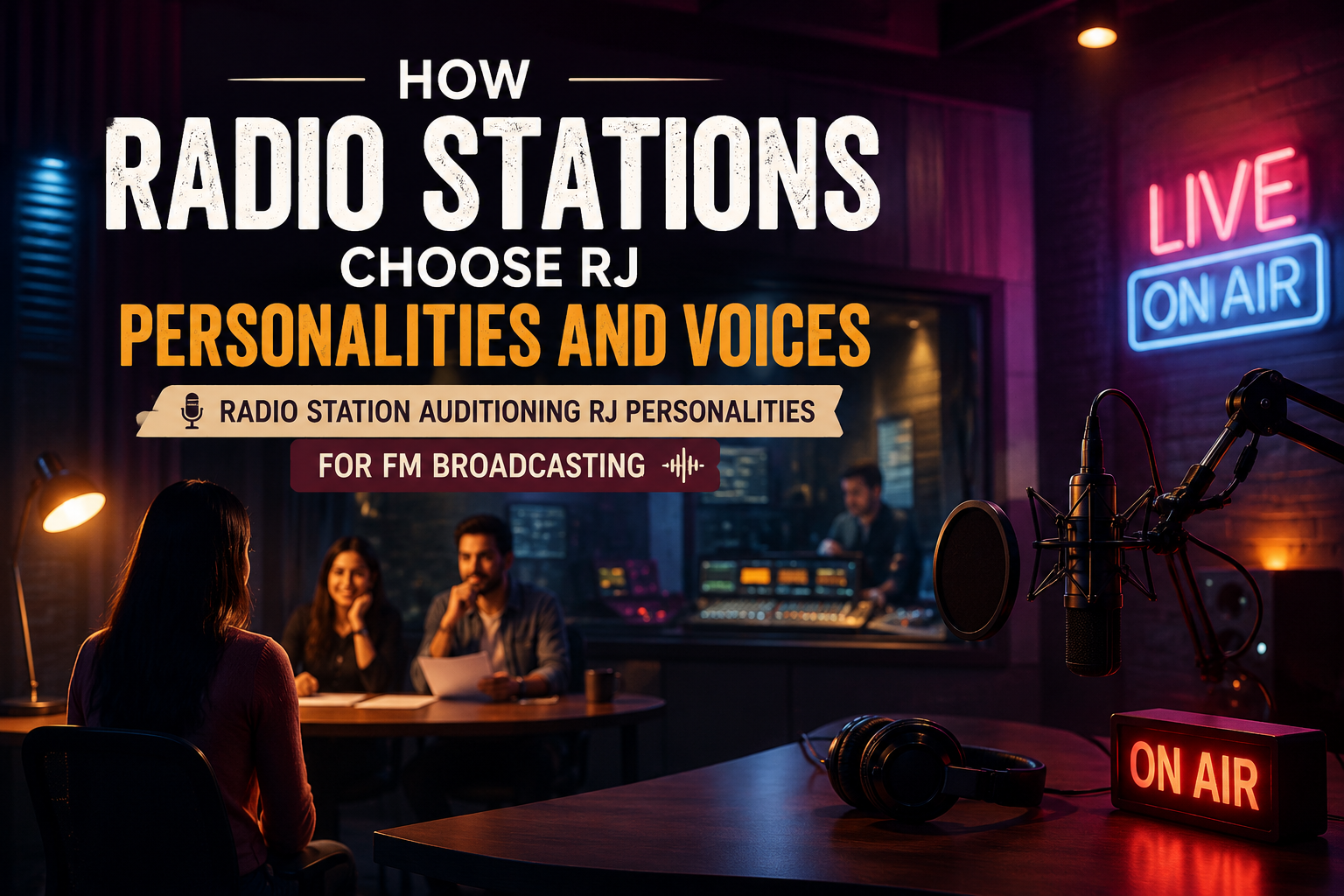
Radio presenters are some of the most influential factors of any broadcasting station. While talk, information, and entertainment programs appeal to listeners, the persona in the back of the microphone often creates the maximum effective connection with audiences. Understanding How Radio Stations Choose RJ Personalities and Voices gives valuable perception into the broadcasting business enterprise and the careful recruitment approach behind achieving radio programming.
Radio stations make enormous investments of time and belongings in selecting radio jockeys due to the truth that they constitute the station’s identity, logo photograph, and target market engagement approach. An expert RJ can increase listener retention, grow target marketplace loyalty, and increase general listening enjoyment. This article explores the factors, techniques, and enterprise necessities involved in selecting radio personalities and voices.
Why Is RJ Selection Important for Radio Stations?
The achievement of a radio station is based heavily upon the support of its presenters. Radio jockeys act as the bridge between the station and its listeners, supporting the establishment of acceptance, familiarity, and leisure. Their conversation talents have an impact on how audiences understand the station and whether or not they keep listening often.
When discussing How Radio Stations Choose RJ Personalities and Voices, it will become smooth that stations are not surely searching out excellent voices. They are seeking out people who may have interplay with audiences, adapt to unique program codes, talk effectively, and reflect the station’s brand identity. A robust RJ contributes properly away to scores, target marketplace growth, and advertising and marketing and marketing sales.
What Qualities Do Radio Stations Look for in an RJ?
Strong Communication Skills
Communication remains the most important first-rate element in radio broadcasting. An RJ needs to supply statistics truly, maintain listener interest, and speak definitely without sounding scripted. Effective conversation allows presenters to assemble actual relationships with their goal market.
Radio stations regularly inspect articulation, pronunciation, storytelling capability, and conversational float in the course of auditions. Presenters who can speak with a bit of luck while preserving authenticity normally stand out eventually from the recruitment system.
Natural Personality and Authenticity
Listeners hook up with personalities in desire of voices alone. Stations searching for humans whose personalities feel actual and relatable. Authenticity allows the listener to construct and not forget and encourages long-time period audience engagement.
A natural presenter can create significant conversations, react spontaneously, and deal with unexpected conditions professionally. This capacity will become, in particular, critical during live broadcasts in which unscripted interactions regularly stand out.
Confidence and On-Air Presence
Confidence drastically influences how an RJ plays when the microphone is returned. Even notwithstanding the truth that listeners cannot see the presenter, self-belief impacts tone, power, and time-commemorated presentations outstandingly.
Stations often examine whether or not applicants can hold composure at some stage in interviews, live segments, target market calls, and program transitions. A strong on-air presence allows presenters to command interest and create memorable listening experiences.
How Do Radio Stations Evaluate Voice Quality?
Voice Clarity and Pronunciation
One of the primary steps in How Radio Stations Choose RJ Personalities and Voices consists of voice assessment. Clear pronunciation ensures listeners recognize each message irrespective of program type.
Broadcasters compare diction, articulation, pacing, and language fluency. A clean voice reduces listener fatigue and improves comprehension across all demographic groups.
Vocal Tone and Appeal
Different radio formats require consideration among types of voice trends. A teenager-centered song station may, moreover, determine active and lively voices at the same time as a data station may prioritize authority and credibility.
Voice attraction includes warm temperature, self-belief, expressiveness, and emotional variety. These elements assist presenters in setting up more potent emotional connections with listeners.
Vocal Consistency
Consistency is important for expert broadcasting. Radio stations confirm whether or not applicants can maintain a top-notch voice for an extended duration without dropping electricity or readability.
Presenters who show sturdy vocal overall performance over lengthy periods are regularly favored due to the fact radio shifts can last numerous hours and require sustained engagement.
What Is the Radio RJ Audition Process?
Initial Application Screening
Most radio stations begin through the usage of reviewing applications, resumes, demo recordings, and previous broadcasting experience. Recruiters search for relevant communication skills and evidence of audience engagement abilities.
Candidates who show off robust ability retain the following degrees, wherein their practical broadcasting competencies undergo more unique assessment.
Voice Audition and Recording Test
Voice auditions permit stations to evaluate how applicants sound on-air. Applicants may be requested to introduce songs, examine scripts, behave in mock interviews, or gift brief program segments.
These assessments help recruiters test voice modulation, presentation style, self-awareness, and flexibility. The audition diploma is one of the most important components of How Radio Stations Choose RJ Personalities and Voices.
Live Simulation Exercises
Many broadcasters conduct stake broadcasting simulations to check how applicants carry out under stressful conditions. These hearing activities reflect actual radio environments and test spontaneous communication skills.
Recruiters evaluate how applicants manipulate timing, transitions, target audience interaction, and unexpected conditions. Performance sooner or later of simulations frequently impacts final hiring alternatives.
How Important Is Personality in Radio Broadcasting?
Building Listener Relationships
Radio remains a pretty non-public medium. Listeners often make bigger, stronger emotional connections with their desired presenters because of the truth they concentrate on, often in the direction of the day.
Stations prioritize personalities who can create a level of companionship and familiarity. This courting-building ability drastically contributes to target audience loyalty and station growth.
Creating Brand Identity
Every radio station has a completely particular individual emblem. Some rely on amusement, others on facts, education, tradition, or network engagement.
When figuring out how radio stations choose RJ personalities and voices, recruiters cautiously test whether or not a candidate’s individuality aligns with the station’s simple positioning and purpose and marketplace expectations.
Enhancing Audience Engagement
Engaging presenters inspire listener participation via mobile phone calls, social media interactions, contests, and discussions. Their capability to keep audience involvement contributes properly now to program fulfillment.
Stations frequently favor applicants who show strong interpersonal talents and an ability to connect with numerous audiences.
How Do Radio Stations Match RJs to Their Target Audience?

Understanding Audience Demographics
Radio stations cautiously take a look at their target marketplace earlier than choosing an RJ. Factors together with age, vicinity, interests, manner of existence, and listening conduct help decide the shape of the presentation so as to resonate most with listeners.
An RJ who is acquainted with and pertains to the goal marketplace can create more potent connections. This alignment regularly results in higher listener engagement, loyalty, and program fulfillment.
Aligning Communication Style
Different listener businesses choose unique presentation patterns. Younger audiences may, moreover, enjoy energetic and informal conversations, even as expert or mature audiences may also pick a more informative and polished approach.
Recruiters determine whether or not applicants can adapt their communication fashion to healthy the station’s target demographic. The proper match allows for creating an extra laugh and relevant listening revelry.
Cultural and Regional Relevance
Many radio stations cater to precise agencies, towns, or areas. Presenters who comprehend community culture, language options, traditions, and community hobbies can communicate extra efficaciously with listeners.
This cultural connection permits the creation of a feel of familiarity and authenticity. As a consequence, audiences are more likely to not forget the presenter and live engaged with the station.
What Role Does Voice Training Play in RJ Selection?
Developing Professional Broadcasting Skills
Even candidates with herbal expertise can benefit from expert voice training. Radio stations often provide schooling to beautify pronunciation, voice modulation, pacing, and breath management.
This education allows presenters to sound extra polished and confident on-air. It additionally guarantees they meet expert broadcasting requirements and supply a consistent listening experience.
Improving Audience Communication
Voice education teaches presenters the manner to talk more efficiently to listeners. They study storytelling techniques, emotional expression, and techniques for maintaining audiences’ engagement.
These talents help RJs collect more potent connections with listeners. Better communication often results in superior target marketplace retention and program fulfillment.
Maintaining Vocal Health
Since broadcasting relies critically on widespread vocal performance, retaining vocal health is essential. Training programs often consist of steering on hydration, vocal warm-ups, and pressure-prevention techniques.
Healthy vocal conduct helps presenters perform constantly at unspecified times in the future of prolonged pronouncements. They are moreover a useful resource for long-term professional growth and sustainability in the radio company.
How Does Experience Influence RJ Recruitment?
Previous Broadcasting Experience
Candidates with advanced broadcasting revel often have a sturdy understanding of program codecs, target market interplay, and company necessities. Their familiarity with radio operations can assist them in adapting fast to on-air duties.
However, enjoyment isn’t always the simplest component considered at some stage in recruitment. Many stations are also looking for sparkling individuals with unique personalities, creativity, and strong communication abilities.
Digital Media Experience
Modern radio stations rate candidates who’ve enjoyed social media, podcasting, and virtual content material introduction. These talents assist presenters in interacting with audiences beyond conventional radio announcements.
An RJ who can gather and have interaction with online organizations provides good-sized prestige to a station. Their digital presence can support a goal market boom and logo visibility.
Public Speaking Background
Experience in public speaking, EventNet website hosting, podcasting, or content creation often translates nicely into radio broadcasting. These sports assist in expanding self-assurance, adaptability, and powerful communication abilities.
Recruiters often keep in mind such revelry because it demonstrates the capability to engage and connect with several audiences. These tendencies are critical for fulfilled radio presenters.
How Has Technology Changed the Way Radio Stations Choose RJ Personalities and Voices?
Technology has considerably converted the recruitment and assessment device in the radio broadcasting agency. In the past, radio stations essentially trusted in-person auditions and smooth voice recordings to assess applicants.
Today, virtual structures, advanced audio tools, and goal-marketplace analytics provide recruiters with deeper insights right into a candidate’s verbal exchange, fashion, personality, and target market attraction earlier than they even enter the studio. As radio continues to mix with virtual media, technology plays an increasing number of essential roles in how radio stations select RJ personalities and voices that align with listener expectations and station objectives.
- Digital Portfolios: Recruiters assess podcasts, online suggestions, and content material samples to evaluate verbal exchange talents.
- Social Media Presence: Audience engagement and follower interplay assist in a degree of a candidate’s recognition and have an effect on it.
- Advanced Voice Analysis: Modern audio gear checks vocal readability, tone, consistency, and presentation superbly.
- Remote Auditions: Candidates can put up recordings and attend digital interviews from any location.
- Content Creation Experience: Podcasting and virtual content material fabrication abilities show storytelling and audience engagement skills.
- Audience Analytics: Stations might also look at listener metrics and engagement information from a candidate’s modern content material fabric.
- AI-Assisted Screening: Some broadcasters use AI devices to organize applications and select out promising skills.
- Multi-Platform Skills: Modern RJs are predicted to carry out these skills throughout FM radio, streaming systems, internet websites, and social media channels.
What Challenges Do Radio Stations Face When Selecting RJs?
Radio stations face several worrying conditions at the same time as deciding on the proper RJ for his or her programs. While a candidate also can have an attractive voice, they will lack the character, confidence, or conversation abilities needed to have interaction with listeners successfully. Recruiters must cautiously compare multiple traits to make certain the presenter aligns with the station’s emblem, goal market expectations, and programming goals.
- Balancing Voice and Personality: A brilliant voice by itself is not sufficient; stations need presenters who can connect to listeners naturally.
- Assessing Audience Appeal: Predicting how audiences will respond to a new RJ may be hard throughout the recruitment stage.
- Finding Brand Alignment: The candidate’s character and presentation style want to suit the station’s identification and target market.
- Evaluating Adaptability: RJs need to deal with live conditions, changing formats, and sudden stressful conditions with self-belief.
- Training Requirements: Some candidates display sturdy functionality but might also additionally require huge education in broadcasting strategies.
- Keeping Up with Industry Trends: Audience picks evolve continuously, making it tough to discover long-term expertise.
- Competition for Top Talent: Experienced and well-known presenters are regularly in excessive demand throughout a couple of stations.
- Multi-Platform Expectations: Modern RJs want to engage audiences for the duration of radio, social media, podcasts, and digital systems.
Conclusion
Understanding How Radio Stations Choose RJ Personalities and Voices indicates that a successful recruitment entails an awful lot more than selecting a person with a nice voice. Radio stations search for presenters who can speak efficaciously, engage listeners, and reflect the station’s logo identification.
The selection method frequently consists of voice checks, character evaluations, aim-market compatibility checks, and professional training. These elements help ensure that the selected RJ can create incredible connections with listeners.
As radio broadcasting keeps complying, the decision for adaptable and attractive presenters stays sturdy. The proper RJ can beautify target marketplace loyalty, beautify program excellence, and contribute considerably to a station’s long-term fulfillment.
Explore Our Recent Blogs
- Why FM Radio Still Works During Emergencies and Disasters
- How Regional Language Content Is Decided on FM Stations?
- The Science Behind Voice Transmission in FM Broadcasting
- How Radio Stations Measure Listener Engagement
- Why Some Songs Repeat More on FM Radio
Frequently Asked Questions
1. What qualifications are required to become a radio jockey?
Formal qualifications range with the aid of station and location. Many a hit RJ has a background in media, journalism, communications, or broadcasting. However, robust verbal exchange abilities, persona, and target audience engagement skills are frequently considered more essential than instructional credentials on my own.
2. Do radio stations prefer experienced presenters?
Experience is treasured; however, many stations actively recruit sparkling expertise. New presenters frequently deliver precise perspectives, creativity, and electricity, which can appeal to trendy audiences. Recruitment selections generally have stability and experience with functionality.
3. How do radio stations test an RJ’s voice?
Stations’ behaviors include voice auditions, recording exams, script readings, and stay simulations. These checks study pronunciation, vocal tone, self-notion, clarity, and audience engagement competencies. Performance all through multiple sports allows recruiters to make informed selections.
4. Can someone with an average voice become a successful RJ?
Yes. While voice is a great subject for man or woman, communication abilities, authenticity, and target audience connection regularly play a larger role in long-term fulfillment. Many well-known presenters are successful because of their engaging style in the region of having historically ideal voices.
5. Why is personality important in radio broadcasting?
Personality permits presenters to forge emotional connections with listeners. Audiences regularly circulate back to programs due to the fact they enjoy the presenter’s fashion, humor, insights, and authenticity. Strong personalities make contributions extensively to listener loyalty.
6. How long does the RJ recruitment process usually take?
The recruitment timeline varies depending on the station. It may additionally contain software opinions, multiple audition rounds, interviews, voice assessments, and training reviews. The entire approach can vary from numerous weeks to three months.