The query “Why Some Songs Repeat More on FM Radio?” is one of the most commonplace curiosities amongst listeners who are aware of certain tracks gambling time and again in the course of the day. FM radio is not random; it’s miles from a carefully hooked-up system driven by a way of goals, marketplace behavior, music programming approaches, and business priorities.
Radio stations’ intention to maintain listener engagement even as ensuring maximum goal marketplace retention, which regularly effects in repetitive airplay of decided-on tracks. This repetition is not unintentional but rooted in statistics, sorting out, and strategic playlist curation.
Understanding this way calls for exploring how FM radio stations feature behind the scenes, together with rotation structures, target market analytics, and track scheduling models. When we smash down Why Some Songs Repeat More on FM Radio, we discover a complicated stability among entertainment, advertising, and target market psychology.
Understanding FM Radio Music Rotation Systems
FM radio stations rely heavily on based-totally track rotation systems to control what songs are played and the manner in which they seem. These structures ensure that playlists remain clean while even reinforcing popular tracks.
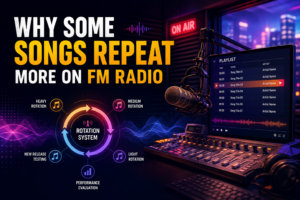
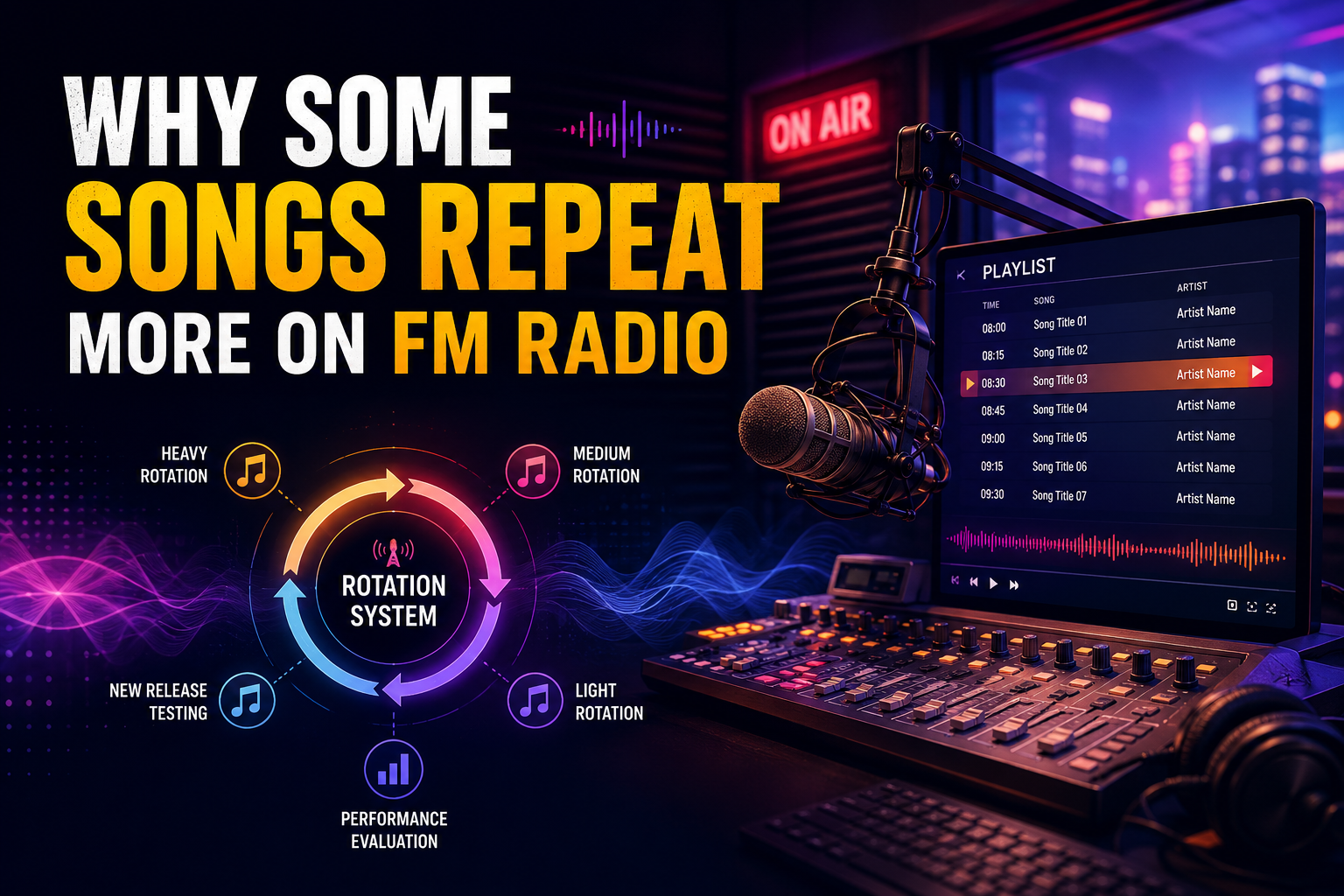
The repetition of songs is usually guided through the manner of rotation classes, together with heavy, medium, and moderate rotation. These lessons decide how frequently a tune is broadcast within a given time frame.
- Heavy Rotation Strategy: Songs in heavy rotation are performed a couple of times consistently per day because of the fact they’re trending or, rather, demanded. These tracks often dominate charts and listener requests.
- Medium Rotation Balance: Medium rotation songs seem to occur sometimes every day, retaining listener interest without overexposure.
- Light Rotation Exposure: Light rotation consists of older or location-of-interest songs completed occasionally to diversify the playlist.
- Audience Retention Focus: Repetition ensures listeners tuning in at unique instances nonetheless pay interest to acquainted and engaging content material.
- Station Branding Impact: Consistent repetition lets station identification and sonic branding stick.
- Data-Driven Selection: Rotation alternatives are brought on via analytics and listener feedback.
Why Some Songs Repeat More on FM Radio?
The central reason behind why some songs repeat more on FM radio lies in target audience engagement metrics and company performance. Radio stations constantly analyze which songs preserve listeners tuned in longer and which ones inspire them to replace stations. Songs that generate higher listener retention are located in commonplace rotation. This ensures that stations maintain sturdy rankings and advertising and marketing income.
Audience Analytics and Listener Behaviour
- Listening Duration Tracking: Songs that show commonplace listening time are prioritized for repetition.
- Request Frequency Monitoring: High request volumes sign popularity and justify repeated airplay.
- Demographic Targeting: Songs are selected based totally on age agency, area, and listener options.
- Time Slot Performance: Certain songs carry out higher for the duration of morning or middle-of-the-night peak time slots.
- Engagement Patterns: Repeated incredible feedback encourages uncommon scheduling.
Emotional Familiarity Effect
- Memory Reinforcement: Repeated exposure permits listeners to retain songs in their thoughts more effortlessly.
- Mood Enhancement: Familiar tracks enhance temper consistency at some stage in each day’s exercise routines.
- Reduced Cognitive Load: Listeners pick recognized songs over unusual ones while in the direction of busy activities.
Role of Radio Programming Strategy in Song Repetition
A number one trouble in Why Some Songs Repeat More on FM Radio is the strategic technique used by radio programmers, who carefully lay out playlists to maximize listener engagement. engagement and keep a constant flow of well-known tunes.
These professionals paint backstage to make sure that every piece of music placed on air contributes to aim market retention, emblem identification, and everyday station performance. In pretty competitive media markets, the programming approach becomes crucial for preserving listeners tuned in for longer periods.
- Playlist Structuring: Songs are carefully prepared to keep electricity going along with the glide and emotional stability at some unspecified time in the future of the posted day. This guarantees a smooth listening experience that keeps audiences engaged without surprising shifts in temper or tone.
- Time-Based Programming: Different types of songs are scheduled for morning, afternoon, and night audiences. This allows aligning desired tracks with listener routines, along with energetic tracks at some unspecified time in the future of commutes and softer music at nighttime.
- Hit Prioritization: Chart-topping and trending songs are given better priority in rotation schedules. These tracks are finished more often because of the reality that they already have sturdy goals, marketplace demand and hooked-up popularity.
- Genre Balancing: An aggregate of genres is maintained to enchant numerous listener corporations. This prevents monotony at the same time as making sure that no single style dominates the entire playlist.
- Brand Identity Alignment: Stations maintain a signature sound through the way of using and over and over again supplying selected tracks that reflect their identification. This allows differentiating one FM station from another in a crowded marketplace.
- Listener Retention Strategy: Familiar and well-known songs are repeated strategically to lessen listener drop-off. This encourages audiences to stay tuned longer, enhancing regular station scores.
How Music Rotation Categories Work?
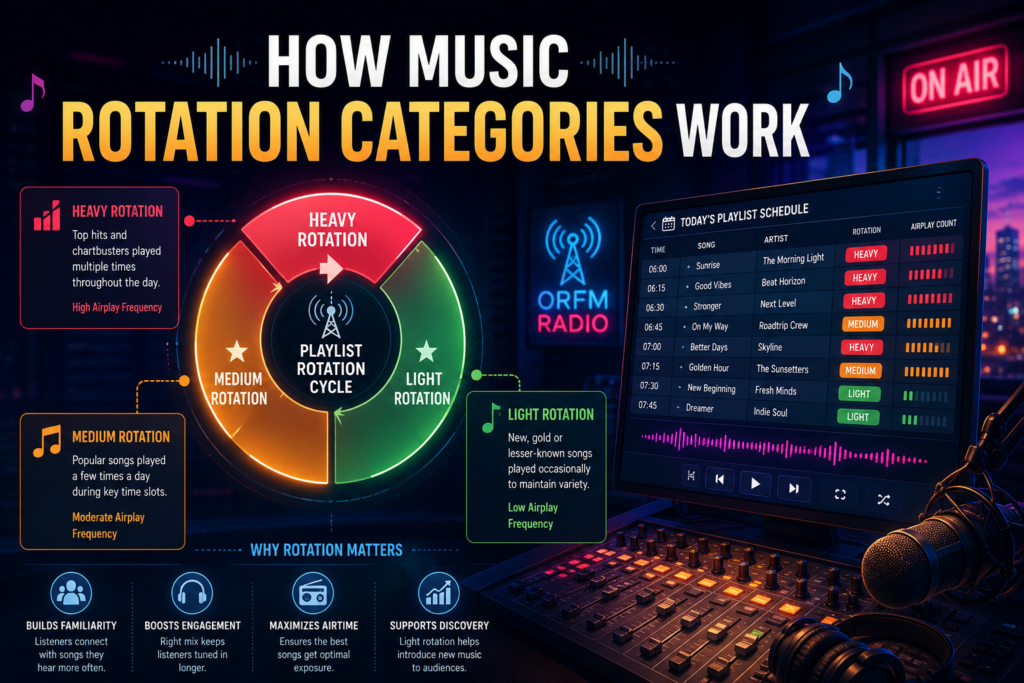
Music rotation instructions are essential in controlling repetition levels throughout FM stations. These classes shape a base part of the broader radio programming approach used globally to manipulate playlist frequency and audience engagement.
- Heavy Rotation Songs: Played every 1-2 hours because of immoderate popularity and sturdy listener appeal. These tracks dominate the playlist due to the reality they constantly carry out well throughout ratings, requests, and target audience retention metrics.
- Medium Rotation Songs: Played a few times every day to keep ordinary exposure without overwhelming listeners. They balance familiarity and variety, ensuring audiences live engaged while keeping off immoderate repetition fatigue.
- Light Rotation Songs: Played once in a while to feature range and freshness in the overall playlist structure. These songs assist stations in diversifying content at the same time as, nonetheless, helping long-term listener hobbies and discovery.
- New Release Testing: Fresh songs are tested earlier than being promoted into better rotation lessons. Listener remarks, streaming ordinary performance, and engagement information decide whether or not they deserve advanced airplay.
- Seasonal Adjustments: Holiday or seasonal tracks may additionally, moreover, in short, be heavy rotation for the duration of applicable intervals. This guarantees programming stays culturally applicable and aligned with target market moods and activities.
- Performance Evaluation: Songs are continuously moved among instructions based totally on listener reaction and analytics. This dynamic adjustment lets us hold a balance of the road between popularity and range.
Influence of Audience Preferences and Listener Behaviour
Audience alternatives drastically impact Why Some Songs Repeat More on FM Radio, as stations continuously adapt their playlists consistent with listener behavior, emotional patterns, and evolving cultural inclinations.
FM radio is especially aware of what audiences revel in most, due to this, songs that resonate strongly with listeners are more likely to be repeated at a few degrees within the day. This creates a comments loop in which famous tracks advantage even extra visibility clearly because of the reality they’ll be continuously chosen and truly received.
- Cultural Trends Impact: Popular cultural moves, collectively with viral traumatic conditions or nearby music waves, heavily have an effect on track preference. Stations align playlists with what is presently relevant in society to preserve listener interest and live culturally up-to-date.
- Regional Preferences: Different geographical areas show extremely good musical tastes and options. FM stations customize rotations to wholesome, close-by target market expectations and enhance relatability.
- Request-Based Programming: Listener requests play a proper role in identifying which songs are repeated more regularly. High request volumes signify a sturdy name for prompting stations to grow airplay frequency.
- Social Media Influence: Viral traits on structures like quick-video apps hastily affect radio playlists. Songs that benefit online reputation frequently enter heavy rotation in a quick time.
- Event-Based Listening: Festivals, countrywide celebrations, and seasonal activities have an impact on listening moods and tune choices. Stations alter playlists to reflect the emotional tone of those sports.
- Daily Routine Alignment: Morning and nighttime slots impact how songs are scheduled. Energetic tracks dominate mornings, at the same time as softer tones are favored in some unspecified time in the future of late hours.
Impact of Chart Rankings and Record Labels
Music charts and report label effects are crucial participants to Why Some Songs Repeat More on FM Radio, as chart regular average performance is often used as a sturdy indicator of a tune’s reputation and target market name.
FM stations prioritize chart-topping tracks because of the fact they’ve already tested their attraction at some stage in streaming systems, earnings, and listener engagement metrics. This guarantees that radio playlists continue to be aligned with what audiences are actively eating and playing.
- Chart Performance Priority: Top-ranked songs collect better airplay frequency due to established popularity. This score, primarily based completely on preference, ensures the station’s hobby is on track and already resonates with big audiences.
- Label Promotion Campaigns: Record labels actively sell new releases to radio stations for wider exposure. These campaigns often embody terrific previews, partnerships, and coordinated release techniques.
- Marketing Budgets Influence: Higher promotional budgets straight away grow a track’s visibility and gain. Well-funded tracks are more likely to enter and live in heavy rotation for longer intervals.
- Global Trends Integration: International hits are speedily incorporated into FM playlists because of international recognition. This allows stations to stay relevant with global trends and target audience expectations.
- Cross-Platform Popularity: Streaming success strongly boosts a track’s possibilities of repeated radio airplay. High normal average overall performance within the course of systems indicators and sturdy listener demand and engagement.
- Commercial Partnerships: Record labels and radio stations frequently collaborate for mutual promotional benefits. These partnerships impact playlist choices and contribute to better rotation frequency.
Radio Station Algorithms and Digital Automation Tools
Modern FM stations more and more rely on digital automation gadgets that significantly affect why some songs repeat more on FM radio. These structures are designed to control massive music libraries effectively, reduce human mistakes, and make sure that playlists live normally with listener calls. Instead of manually deciding on every song, stations now rely on software program-driven scheduling that follows established guidelines and average overall performance facts.
- Smart Scheduling Systems: Algorithms determine the first-class placement of songs in each day’s playlists. These systems optimize timing to maximize listener retention and make smooth transitions amongst tracks.
- Data-Driven Rotation: Airplay frequency is calculated from the usage of analytics from a couple of goal marketplace record sources. This ensures that pleasant, immoderate-appearing songs get kept from extended repetition during time slots.
- Automated Playlist Updates: Songs are added, eliminated, or shifted routinely without manual intervention. This lets stations reply rapidly to inclinations and preserve up-to-date playlists.
- Listener Data Integration: Real-time intention marketplace comments are right now fed into programming structures. This helps stations adjust rotations primarily based entirely on actual listener behavior in choice to assumptions.
- Performance Tracking Tools: Advanced equipment screen engagement ranges on the side of listening duration and station switching. These insights assist in refining which songs deserve higher or decreased rotation.
- Efficiency Improvement: Automation reduces human bias and will increase operational performance in track scheduling. It ensures consistency in programming picks during considered one-of-a-type time intervals and DJs.
Controversies Like Payola and Industry Influence
The concept of payola, in which record labels have an impact on airplay via economic incentives, has historically affected why some songs repeat more on FM radio. In earlier years, sure, song labels have been determined to have not directly or without delay paid for advanced radio exposure, which added to critical company scandals and stricter broadcasting rules. While contemporary-day FM radio operates below more obvious guidelines, the legacy of those practices shapes how the agency is perceived nowadays, though.
- Historical Payola Practices: Past payola scandals drastically encouraged the improvement of present-day broadcasting laws. These incidents brought about stricter oversight and further transparency requirements in radio programming.
- Label Influence: Record labels, despite the fact that they use promotional campaigns to boom a tune’s publicity. Strong advertising and marketing efforts can’t right away contribute to higher repetition on FM stations.
- Advertising Partnerships: Commercial agreements among stations and sponsors could have an impact on playlist choices. These partnerships regularly assist unique promotional cycles for emblematic, brand-new music releases.
- Regulatory Oversight: Broadcasting authorities put into effect pointers to save you from unfair manipulation of airplay. These hints’ purpose is to make sure that playlist choices stay balanced and aim to be market-focused.
- Transparency Efforts: In a few regions, stations display backed or promoted content extra truly. This enables the maintainer to listen and take delivery of it as genuine and reduces issues about hidden things having an effect on it.
- Ethical Programming Concerns: Stations need to balance commercial pursuits with fair track-choice practices. Maintaining credibility at the same time as assisting business organization goals remains an ongoing venture.
How FM Radio Stations Decide Playlist Curation?
Playlist curation is at the coronary heart of Why Some Songs Repeat More on FM Radio, because it determines which tracks are decided on, prioritized, and repeated at some point in unique time slots. FM stations do not randomly build playlists; alternatively, they cautiously pick songs that align with audience expectancies, brand identity, and ordinary programming goals. This guarantees that the listening enjoyment stays consistent, enticing, and commercially powerful.
- Audience Research Surveys: Listener remarks are gathered via surveys and remark channels to refine playlist selections. This permits stations to apprehend what audiences experience maximum and what they prefer to pay interest in more frequently.
- Music Testing Panels: Selected songs are tested with sample audiences earlier than being introduced to complete rotation. Their reactions determine whether or not a song is suitable for heavy, medium, or light rotation.
- Trend Analysis: Stations carefully show streaming systems and social media trends for growing hits. Songs gaining traction online are quickly considered for stepped-forward FM airplay.
- Competitive Benchmarking: Radio stations analyze competitor playlists to stay applicable in the market. This ensures they are no longer missing out on trending or high-name music.
- Brand Positioning Strategy: Music choice is aligned with the station’s identity and target marketplace. Each station maintains a remarkable sound to distinguish itself from opposition.
- Continuous Optimization: Playlists are frequently updated based totally on typical performance statistics and listener response. This ongoing adjustment enables preserving relevance and decorating for goal marketplace retention.
Future of FM Radio and Music Airplay Trends
The destiny of FM broadcasting will maintain compliance, but why some songs repeat more on FM radio will live surprisingly relevant due to strong human listening behavior and the mental comfort created through familiar songs.
Even as generation advances, repetition will preserve playing a key role in keeping audience engagement, in particular during everyday workouts, which embody commuting, running, or training. FM radio will depend on familiarity to construct listener loyalty and long-term retention.
- AI-Powered Playlists: Future radio structures will use synthetic intelligence to refine song choice with greater accuracy. These structures will have a look at listener behavior in real time to optimize rotation styles.
- Hybrid Radio Models: FM broadcasting will integrate with streaming structures and digital offerings in an increasing number. This will create a persevering enjoyment among conventional radio and on-air listening.
- Hyper-Personalization: Localized and personalized content material also can reduce vain repetition for a few listener segments. Stations will tailor playlists more exactly to character and target market alternatives.
- Data-Driven Evolution: Music programming will rely even more greatly on superior analytics and predictive modeling. This will assist stations in counting on traits earlier than they, without a doubt, emerge.
- Listener Control Expansion: Audiences may additionally, moreover, benefit more and have an effect on over playlists via interactive structures. This can also additionally encompass vote-casting structures or real-time comment-based programs.
- Cross-Platform Synchronization: Radio playlists will align more carefully with streaming services and digital charts. This ensures consistency in what audiences listen to throughout precise media channels.
Conclusion
Understanding Why Some Songs Repeat More on FM Radio: Well-known, a complicated broadcasting surrounding is formed with the aid of intentional marketplace behavior, programming approach, industrial priorities, and superior scheduling technologies. Song repetition isn’t always random or unintentional; as an opportunity, it is a carefully deliberate final effect designed to maximize listener engagement, enhance station rankings, and hold robust goal market retention sooner or later in the day.
FM radio stations depend on installation rotation structures and real-time information insights to determine which tracks deserve frequent airplay. As FM radio continues to conform to virtual gear and records-pushed programming, repetition will live as a central part of its method. Familiar songs help create emotional connection and listening comfort at the same time as, however, allowing room for variety and new tune discovery.
Explore Our Recent Blogs
- How Live Radio Shows Are Broadcast Without Delay?
- Why FM Radio Still Works During Emergencies and Disasters
- How Regional Language Content Is Decided on FM Stations?
- The Science Behind Voice Transmission in FM Broadcasting
- How Radio Stations Measure Listener Engagement
.
Frequently Asked Questions
1. Why do FM radio stations repeat the same songs frequently?
FM stations repeat songs because of the reality that repetition will boom listener familiarity and retention. When listeners play a hobby-acquainted tune, they’re more likely to leave it tuned. This improves rankings and advertising and marketing sales, which is a key organization purpose for stations.
2. Is song repetition on FM radio based on popularity?
Yes, reputation plays a chief role in identifying repetition. Songs that perform well on charts, streaming platforms, and listener requests are positioned in heavy rotation. This guarantees that target marketplace favorites are heard more regularly in the course of the day.
3. Do radio stations use algorithms to choose songs?
Modern FM stations increasingly depend upon algorithms and automation systems. These structures take a look at listener behavior, engagement information, and general performance metrics. The motive is to optimize playlists and beautify target market retention.
4. What is heavy rotation in FM radio?
“Heavy rotation” refers to songs that might be played very often, on occasion every 1 to 2 hours. These are normally trending hits or high-call tracks. This magnificence is essential to expertise: Why Some Songs Repeat More on FM Radio.
5. Can listener requests influence song repetition?
Yes, listener requests extensively affect playlist picks. When a track is often asked for, it signals sturdy, goal-market interest. Stations reply with the useful resource of increasing their rotation frequency.
6. Do record labels influence FM radio playlists?
Record labels may want to have an impact on playlists via advertising and promotional campaigns. While strict suggestions exist, enterprise partnerships and promotional efforts nevertheless have an impact on how regularly advantageous songs are finished.