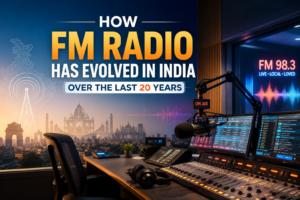
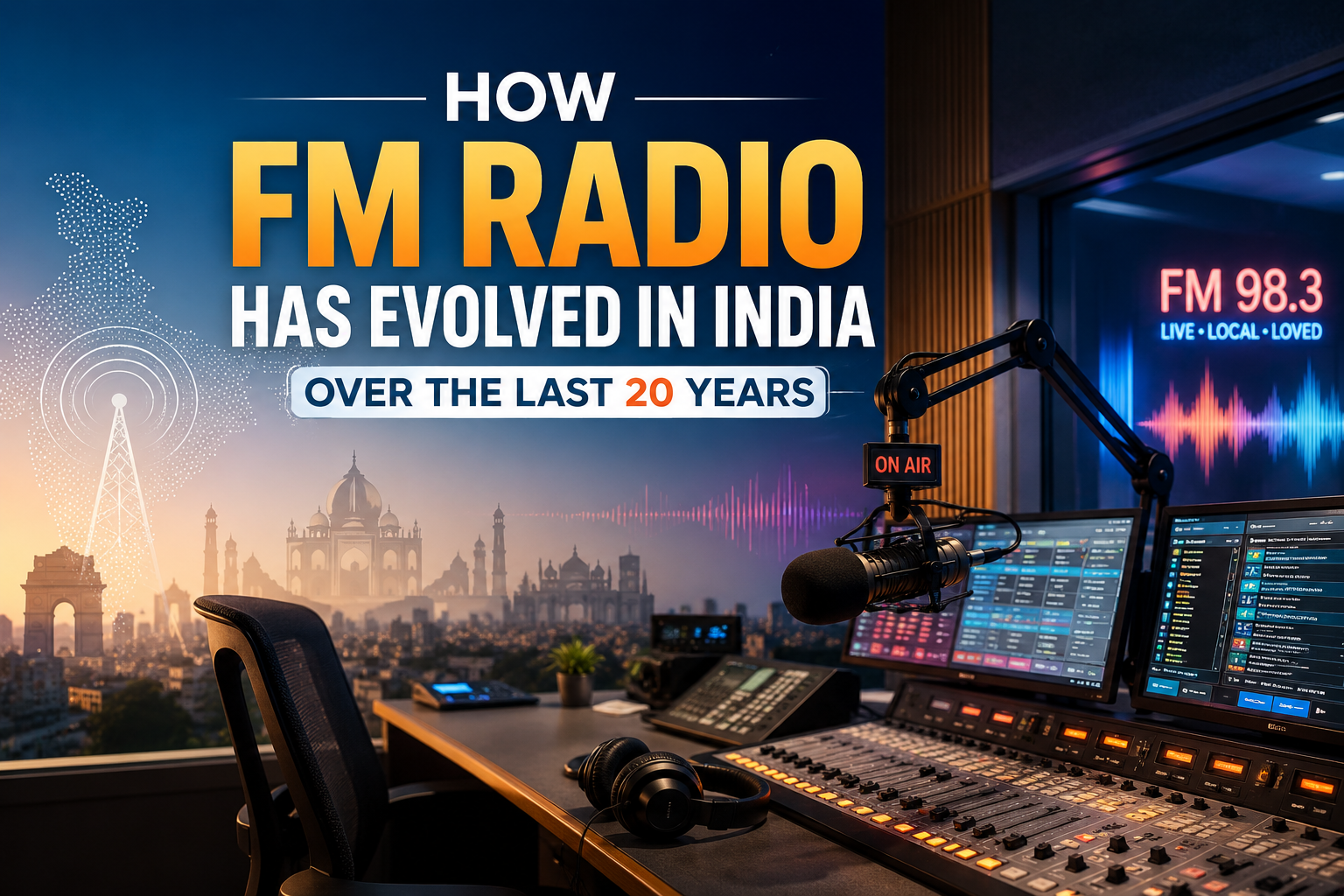
Over the past few years, the Indian radio organization has undergone a super transformation pushed by the resources of technological advancements, policy reforms, and expanding listener options. The story of How FM Radio Has Evolved in India Over the Last 20 Years displays the shift from authority-controlled broadcasting to a colorful network of private stations and digital systems.
Today, FM radio is an outstanding deal more than a source of tracks and information. It has come to be a crucial leisure medium, a powerful advertising and marketing platform, and a strong cultural voice for nearby corporations throughout the USA.
The growth of FM broadcasting in India, the increase of non-public FM channels in India, and the upward thrust of digital streaming have helped radio stay relevant in the current media panorama. As a result, FM radio maintains attachment to hundreds of thousands of listeners inside the routes of towns, semi-cities, and rural areas.
Early Phase of FM Radio Development in India (Pre-2000 Era)
Before “Expertise: How FM Radio Has Evolved in India Over the Last 20 Years,” it is essential to observe its early basis. FM broadcasting in India ends up starting restrained and controlled, broadly speaking, with the beneficial aid of government-owned services. The obtainment has changed into limited, and the content range has turned out to be minimal in evaluation to nowadays’s necessities.
During this section, radio turned out to be specifically dominated through AM broadcasting and All India Radio, which served as the primary deliverer of data, education, and amusement for the masses. FM has become used more for experimental and metro broadcasting in place of mass adoption.
Key Characteristics of Early FM Radio
- Limited Frequency Access: FM frequencies were tightly regulated, and just a few stations operated in crucial metro towns. This restrained FM radio gets right of entry for listeners in smaller towns and rural regions.
- Government-Controlled Content: Most programs were produced under authorities’ supervision with strict broadcasting tips. This decreased revolutionary freedom and constrained content material variety for audiences.
- Low Commercial Value: Radio advertising and marketing in India remained restricted due to a smaller purpose market to acquire and centered on options. Most advertisers desired television and print media within the course of this period.
- Technical Limitations: Early FM broadcasting suffered from inconsistent signals, extremely poor audio, and transmission issues. Coverage areas had been, moreover, hundreds smaller than extremely cutting-edge FM networks.
- Lack of Private Participation: Private broadcasters had not yet entered the mainstream FM broadcasting marketplace. The industry remained in large part controlled by the useful resource of public radio services.
- Audience Dependency on AM Radio: Most listeners endured depending upon AM radio for data and amusement. Its wider coverage made it extra available in some parts of India.
Liberalisation and the Rise of Private FM Channels in India
A vital turning issue in How FM Radio Has Evolved in India Over the last 20 years came monetary liberalization and authorities’ reforms in the early 2000s. The Indian government opened the FM vicinity for professional gamers, triggering a revolution in radio broadcasting.
This added approximately to the emergence of personal FM channels in India, which introduced sparkling content codecs, music-driven programming, and town-precise shows. The radio employer grew in India, extending abruptly as a couple of games entered the market.
Key dispositions at some stage in this section:
- Introduction of Private FM Licensing: The government auctioned FM licenses to private corporations in the early 2000s. This opened the marketplace for commercial radio broadcasting in India.
- Rise of Music-Centric Programming: Stations targeted Bollywood songs and young people-oriented entertainment closely. Interactive shows and themed programs additionally obtained a reputation.
- Growth of Radio Jockey Culture: The characteristics of radio jockeys have turned out to be more and more crucial in attracting listeners. Many RJs have become well-known personalities and close to celebrities.
- Expansion of City-Based Stations: FM stations started centered on neighborhood audiences with town-particular programming. Hyper-neighborhood content helped fortify listener connections.
- Improved Radio Advertising Market: Brands commenced making and funding extra in FM advertising and marketing due to strong target-audience engagement. Radio has become an effective medium for nearby promotions.
- Increased Listener Engagement: Phone-in suggestions, contests, and track requests have come to be well-known program codecs. These features made FM radio more interactive and appealing.
Digital Revolution and FM Radio Transformation in India
One of the most wonderful degrees of how FM radio has evolved in India over the last 20 years is the virtual transformation generation. With the rise of smartphones and internet accessibility, FM radio extended past traditional gadgets.
Digital radio streaming in India has ended up as a parallel platform in which FM content has grown to be made available online via apps, websites, and OTT systems. This helped FM radio continue to exist despite the competition from song streaming offerings and podcasts.
Key functions of digital transformation:
- Online Streaming Platforms: FM stations started out live-streaming their content through websites and mobile applications. This allowed listeners to get proper right of entry to pronunciations from everywhere within the globe.
- Integration with Smartphones: Smartphones are increasingly more covered and integrated with FM capabilities or internet radio access. This made taking notes of FM radio more of a possibility for customers.
- Podcast Competition: The growing reputation of podcasts drives FM stations to innovate their content. Broadcasters delivered new codecs to hold audience interest.
- On-Demand Content Availability: Listeners obtained the ability to replay and seize disregarded programs later. This flexibility improved the general listening experience.
- Social Media Integration: Radio stations and RJs began promoting content material on social media structures. This helped boost goal-marketplace engagement beyond traditional announcements.
- Improved Audio Quality: Digital generation has more potent sound clarity and decreased transmission troubles. Listeners cherished an extra constant and fantastic audio experience.
Growth of Community Radio and Regional FM Expansion
Another crucial measurement of how FM radio has evolved in India over the last 20 years is the expansion of community radio in India and neighborhood broadcasting networks. This improvement helped FM radio penetrate rural and semi-town areas. Community radio stations focused on nearby culture, education, agriculture, and social consciousness applications. These stations performed a critical function in connecting underserved populations.
Major contributions of network radio:
- Local Language Programming: Community radio stations broadcast content material in community languages and dialects. This stepped-up accessibility and listener engagement in neighborhood organizations.
- Educational Awareness Campaigns: Programs targeted on fitness focus, farming practices, and government responsibilities. These broadcasts helped educate rural populations successfully.
- Grassroots Communication Tool: Community radio served as a link among government and neighborhood citizens. It helped unfold vital records fast and efficaciously.
- Empowerment of Local Talent: Local presenters, RJs, and content material creators acquired opportunities to take part. This recommended community involvement in broadcasting.
- Cultural Preservation: Traditional tracks, folklore, and local memories have often been featured on air. This helped hold nearby matters of existence and records.
- Affordable Broadcasting Model: Community radio required incredibly low investment and operating expenses. This supported radio growth in rural and underserved regions.
FM Radio Advertising and Revenue Growth in India
Advertising has been a main causal force in how FM radio has evolved in India over the last 20 years. As FM stations proliferated, brands recognized the capability of radio advertising in India as a price-powerful advertising and marketing channel. FM radio has emerged as especially powerful for targeting nearby audiences and selling to retail corporations, enjoyment events, and customer merchandise.
Key advertising and marketing traits:
- Localized Advertising Campaigns: Businesses targeted particular towns and areas through tailor-made radio classified ads. This stepped-up relevance delivered a better cross-lower back on investment.
- Celebrity RJ Endorsements: Popular RJs commenced selling products and services for the duration of their shows. They have an effect on helping increase audience reception as real and campaign effectiveness.
- Seasonal Campaign Strategies: Festivals, holidays, and community sports activities created higher advertising and marketing reach. Brands elevated their radio spending during those top intervals.
- Interactive Brand Promotions: Live contests, quizzes, and giveaways encouraged goal marketplace participation. These sports activities made advertising extra appealing and noteworthy.
- Affordable Marketing Channel: FM radio furnished charge-powerful advertising in comparison to TV campaigns. This made it attractive for close-by and nearby groups.
- Growth of Sponsorship Models: Many manufacturers commenced sponsoring entire stages or program segments. Sponsorships furnished everyday visibility and a more potent emblem to preserve in mind.
Role of Technology in Modern FM Radio Broadcasting

Technology has virtually redefined how FM radio has evolved in India over the last 20 years. Modern FM stations depend upon automation, AI-pushed playlists, and digital broadcasting devices. This technological shift has advanced overall performance, content transport, and targeted marketplaces based on competencies throughout India.
Key technological upgrades:
- Automated Playlist Systems: AI-based totally, definitely software program applications now manage track scheduling and playlist rotation successfully. This helps stations hold constant programming at some point of the day.
- Cloud-Based Broadcasting: Radio stations can now manipulate operations remotely using Cloud Era. This has prolonged flexibility and decreased infrastructure dependence.
- Data-Driven Programming: Broadcasters use listener analytics to understand audience alternatives better. These insights assist in shaping content material and scheduling options.
- High-Definition Audio Streaming: Advances in the virtual era have appreciably advanced sound exceptionally. Listeners now revel in clearer and more reliable audio testimonies.
- Integration with Smart Devices: FM radio is offered via clever speakers, related cars, and mobile devices. This has increased listening opportunities all through more than one system.
- Real-Time Audience Feedback: Digital systems permit stations to build up right-now listener responses and evaluations. This enables broadcasters to decorate engagement and content material splendidly.
Conclusion
The journey of how FM radio has evolved in India over the last 20 years highlights the outstanding transformation of radio from a central authority-managed medium straight into a present-day dynamic amusement platform. The upward thrust of personal FM stations, nearby content, and digital technologies has reshaped the employer drastically.
From superstar RJs and interactive programs to online streaming and cell accessibility, FM radio has continuously tailored itself to converting listener options. These improvements have helped radio stay relevant, notwithstanding developing competition from digital structures.
As technology continues to enhance, FM radio is expected to encompass even greater virtual integration and smarter broadcasting solutions. The evolution of how FM radio has evolved in India over the last 20 years proves that radio will preserve itself to inform, entertain, and be a part of audiences in some parts of India for decades.
Explore Our Recent Blogs
- The Science Behind Voice Transmission in FM Broadcasting
- How Radio Stations Measure Listener Engagement
- Why Some Songs Repeat More on FM Radio
- How Radio Stations Choose RJ Personalities and Voices
- How Online Radio Platforms Stream Multiple Cities at Once
Frequently Asked Questions
1. How has FM Radio Evolved in India Over the Last 20 Years?
FM radio in India has evolved from a government-controlled medium to a dynamic, digital-first broadcasting atmosphere. It now includes non-public stations, online streaming, and local community radio networks. The evolution shows technological growth and changing goal-market behavior. Overall, it has emerged as extra interactive, accessible, and commercially feasible.
2. What are the major changes in FM broadcasting in India?
The largest modifications include getting proper access to personal FM channels, digital streaming integration, and a progressive content fabric range. Earlier, radio became constrained to fundamental tunes and statistics; however, now it consists of communicative suggestions, podcasts, and interactive applications. Technology has extra-excellent audio, additionally, and these modifications have appreciably extended target-audience engagement.
3. How has digital technology impacted FM radio in India?
The digital era has made FM radio available through smartphones, apps, and online structures. It has enabled global streaming and on-call for content material, and I get right of entry to. Social media integration has additionally multiplied listener interaction. This transformation has helped FM radio compete with modern-day streaming offerings.
4. What is the role of radio jockeys in FM radio evolution?
Radio jockeys have emerged as critical to FM radio achievement in India. They no longer present high-quality indications but, furthermore, assemble emotional connections with listeners. Their personalities strain goals, market loyalty, and logo engagement. Over time, RJs have ended up as media influencers and enjoyment icons.
5. How important is radio advertising in FM growth?
Radio advertising and advertising and marketing have accomplished an important function in FM employee increase. It offers low-rate and targeted advertising and marketing and advertising and marketing and advertising and marketing and marketing answers for organizations. Localized campaigns help brands benefit precise audiences efficaciously. This has made FM radio a robust earnings-generating medium.
6. What is the future of FM radio in India?
The destiny of FM radio lies in hybrid broadcasting that mixes conventional FM with virtual streaming. AI-pushed content, custom-designed playlists, and clever tool integration will dominate the enterprise agency. Despite opposition from podcasts, FM radio will hold on to stay applicable because of its network and live nature.